
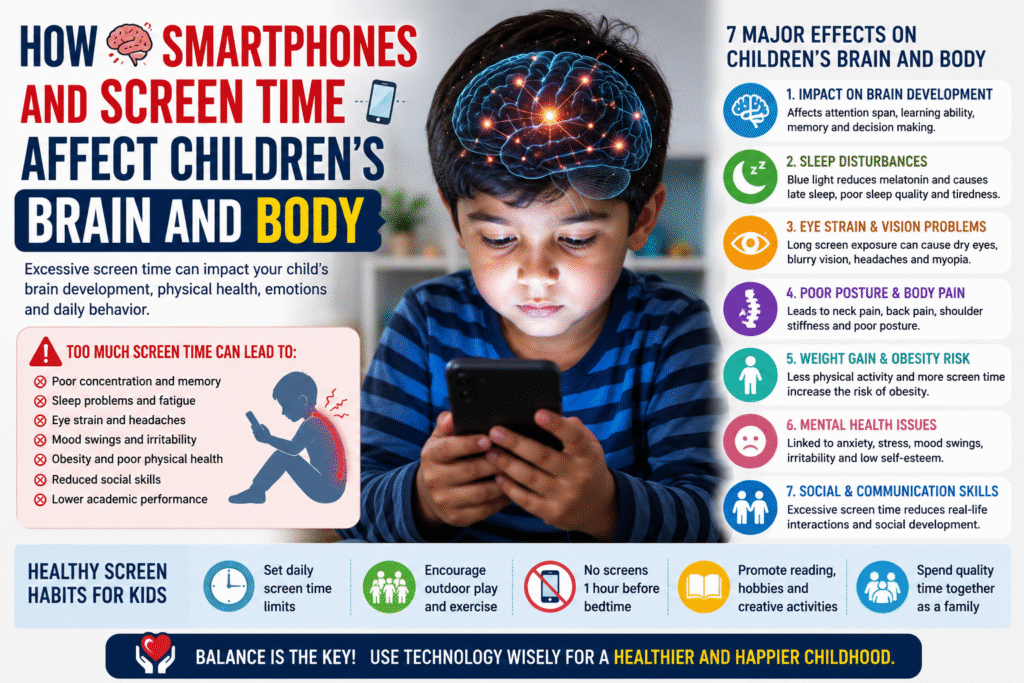
In today’s digital world, screens are everywhere. Smartphones, tablets, televisions, laptops, gaming consoles, and online classes have become a regular part of children’s daily life. While technology offers learning opportunities and entertainment, excessive screen exposure is creating serious health concerns for children worldwide.
Many parents notice their children becoming irritated without mobile phones, sleeping late at night, struggling to focus in school, or complaining about headaches and eye pain. These are not small issues. Studies suggest that too much screen time can negatively affect a child’s brain development, mental health, physical fitness, eyesight, and social behavior.
Children’s brains are still developing, which makes them highly sensitive to digital overstimulation. Excessive use of screens can interfere with sleep hormones, reduce physical activity, weaken attention span, and even impact emotional development.
In this article, you will discover the 10 shocking ways screen time impacts children’s brain, eyes, and overall health, along with warning signs, expert recommendations, and practical tips for parents to create healthier digital habits.
Table of Contents
What Is Considered Excessive Screen Time and how Screen Time Impacts Children’s Health?
Screen time refers to the amount of time spent using devices with screens such as:
- Smartphones
- Tablets
- TVs
- Computers
- Video games
- Online learning devices
According to pediatric experts:
- Children under 2 years should avoid screen exposure except video calls.
- Children aged 2–5 years should have less than 1 hour of supervised screen time daily.
- Older children and teenagers should have balanced limits with physical activity and proper sleep.
However, many children today spend 5–10 hours daily on screens, especially after online education and social media growth.
1. Screen Time Negatively Affects Brain Development
One of the most concerning effects of excessive screen time is its impact on brain development.
Young children learn through real-world interaction, physical play, communication, and exploration. Too much screen exposure reduces these healthy activities and overstimulates the brain with fast-moving visuals and constant dopamine release.
Possible Brain-Related Effects
- Reduced attention span
- Poor concentration
- Delayed language development
- Memory problems
- Difficulty learning in school
- Reduced creativity and imagination
Children addicted to fast digital content may struggle with patience and deep thinking because their brains become used to constant stimulation. Excessive use of short-form videos and games can especially affect focus and emotional control.
2. Excessive Screen Time Causes Eye Problems
Children’s eyes are highly sensitive to digital screens. Long hours of exposure can lead to a condition called Digital Eye Strain.
Common Eye Problems in Children
- Dry eyes
- Blurred vision
- Eye irritation
- Headaches
- Burning sensation
- Increased risk of myopia (short-sightedness)
Blue light from screens may also interfere with natural eye function and sleep cycles.
Warning Signs Parents Should Notice
- Frequent eye rubbing
- Sitting too close to screens
- Complaints of headaches
- Squinting while reading
- Watery or red eyes
The increasing number of children needing glasses at an early age is strongly linked to excessive indoor screen activities and reduced outdoor exposure.
3. Screen Addiction Impacts Mental Health
Digital addiction is becoming a serious issue among children and teenagers.
Games, social media apps, and video platforms are designed to keep users engaged for long periods. This can create dependency and emotional instability.
Mental Health Effects of Screen Addiction
- Anxiety
- Mood swings
- Depression symptoms
- Irritability
- Low self-esteem
- Emotional isolation
Children may become aggressive or frustrated when devices are taken away. Over time, excessive digital stimulation can reduce emotional resilience and increase stress levels.
Social media exposure may also create unrealistic comparisons, especially in teenagers.
4. Poor Sleep Quality and Sleep Disorders
Sleep is essential for healthy brain growth and immune function in children. Unfortunately, screens are one of the biggest reasons behind poor sleep habits today.
How Screens Affect Sleep
Blue light suppresses melatonin, the hormone responsible for sleep. Watching screens before bedtime keeps the brain alert and delays sleep onset.
Effects of Poor Sleep in Children
- Difficulty waking up
- Daytime tiredness
- Poor academic performance
- Weak immunity
- Behavioral issues
- Increased stress
Children who use phones late at night often sleep fewer hours and experience disturbed sleep quality.
Keeping devices in bedrooms is one of the major causes of unhealthy sleep routines.
5. Reduced Physical Activity Leads to Obesity
Children who spend too much time on screens are usually less physically active.
Instead of outdoor games and sports, many children spend hours sitting with phones, tablets, or gaming consoles. This sedentary lifestyle contributes to weight gain and poor fitness.
Health Risks Linked to Inactivity
- Childhood obesity
- Weak muscles and bones
- Poor posture
- Reduced stamina
- Increased future risk of diabetes and heart disease
Lack of movement also affects metabolism and energy balance. Children need active play for healthy physical and mental development.
6. Screen Time Affects Social Skills and Communication
Human interaction is extremely important during childhood.
Children develop communication skills through face-to-face conversations, eye contact, group activities, and emotional experiences. Excessive screen use can reduce these opportunities.
Social Problems Linked to Excessive Screen Use
- Difficulty making friends
- Reduced empathy
- Poor communication skills
- Social anxiety
- Emotional disconnect from family
Some children become more comfortable communicating online than interacting in real life.
This may affect confidence and emotional intelligence later in life.
7. Behavioral Problems and Aggression Increase
Many parents notice behavioral changes in children after long screen exposure.
Fast-paced content, violent games, and overstimulation can affect emotional regulation and patience levels.
Common Behavioral Changes
- Anger issues
- Impatience
- Hyperactivity
- Lack of discipline
- Emotional outbursts
- Reduced tolerance
Children exposed to violent or addictive digital content may imitate aggressive behavior.
Constant screen stimulation also makes normal daily activities feel “boring,” reducing attention toward studies and family interaction.
8. Poor Academic Performance and Concentration
Excessive screen time often affects learning ability and school performance.
Children distracted by games, videos, and social media may struggle to focus on homework and studies.
Academic Effects of Screen Overuse
- Poor memory retention
- Reduced concentration
- Lower grades
- Lack of interest in studies
- Multitasking habits that reduce productivity
Switching constantly between apps and content weakens deep focus and learning efficiency.
Educational screen use is different from entertainment screen use, but balance is still necessary.
9. Poor Posture and Physical Pain
Spending hours using devices can negatively affect posture and musculoskeletal health.
Children often bend their necks while using smartphones or sit incorrectly for long periods.
Physical Problems Caused by Poor Posture
- Neck pain
- Back pain
- Shoulder stiffness
- Wrist pain
- Spinal stress
The term “Tech Neck” is now commonly used to describe neck strain caused by prolonged device usage.
Growing children need proper movement and posture to support healthy bone development.
10. Weak Family Bonding and Emotional Connection
Excessive screen use can reduce family interaction and emotional closeness.
Many families spend time together physically but remain emotionally disconnected because everyone is focused on devices.
Effects on Family Relationships
- Less communication
- Reduced emotional bonding
- Increased loneliness
- Poor parent-child connection
Children need emotional support, conversations, and shared experiences for healthy emotional development. Replacing family interaction with screens can affect emotional security and trust.
Signs Your Child May Have Too Much Screen Time
Parents should watch for these warning signs:
- Constant demand for phones or tablets
- Irritability without screens
- Sleep problems
- Declining grades
- Reduced outdoor play
- Headaches or eye strain
- Lack of interest in hobbies
- Social withdrawal
- Mood swings
Early identification can help prevent long-term health effects.
How Parents Can Reduce Screen Time in Children ?
Reducing screen time does not mean completely removing technology. The goal is healthy balance.
1. Set Daily Screen Limits
Create fixed time rules for entertainment screen usage.
2. Encourage Outdoor Activities
Sports, cycling, walking, and playground activities improve physical and mental health.
3. Avoid Screens During Meals
Family meal times should remain device-free.
4. Keep Bedrooms Screen-Free
Avoid mobile phones and TVs in sleeping areas.
5. Become a Role Model
Children copy parents’ habits. Reduce your own unnecessary screen use.
6. Promote Creative Activities
Encourage reading, drawing, music, puzzles, and hobbies.
7. Follow the 20-20-20 Eye Rule
Every 20 minutes, children should look 20 feet away for 20 seconds.
8. Use Parental Controls Monitor content quality and screen duration.
Healthy Alternatives to Screen Time Impacts on Children’s Health
Here are some healthier activities for children:
- Outdoor sports
- Story reading
- Art and craft
- Family board games
- Gardening
- Music practice
- Yoga and exercise
- Science experiments
- Cooking with parents
Balanced activities improve creativity, fitness, and emotional health.
The Positive Side of Technology
Technology itself is not the enemy. When used correctly, screens can support:
- Online education
- Creativity
- Skill development
- Communication
- Learning opportunities
The real problem is uncontrolled and excessive usage. Healthy digital habits are the key.
Final Thoughts
Technology has become a permanent part of modern childhood, but excessive screen exposure comes with serious risks. From brain development issues and eye strain to sleep disorders, obesity, emotional problems, and social difficulties, the effects of too much screen time can impact nearly every aspect of a child’s health.
Parents must create a balanced digital environment where children enjoy technology responsibly while also participating in physical activities, real-world interactions, learning experiences, and family bonding. Small lifestyle changes today can protect children’s mental, emotional, and physical health in the future.
The goal is not to eliminate screens completely — it is to build healthier habits that allow children to grow, learn, and thrive both online and offline.
FAQs on Shocking Ways Screen Time Impacts Children’s Health
1. How much screen time is healthy for children?
Experts recommend less than 1 hour daily for children aged 2–5 years and balanced limits for older children with enough sleep and physical activity.
2. Can screen time damage children’s eyesight?
Yes, excessive screen exposure may cause eye strain, dryness, headaches, and increased risk of myopia.
3. Does screen time affect children’s brain development?
Too much screen exposure may affect attention span, memory, emotional control, and language development.
4. Can excessive screen time cause behavioral problems?
Yes, children may develop irritability, aggression, mood swings, and reduced patience due to overstimulation.
5. How can parents reduce screen addiction in children? Set time limits, encourage outdoor activities, avoid screens before bedtime, and create screen-free family routines.
Related Articles:-
7 Ayurvedic Morning Drinks for Better Digestion and Energy
7 Powerful Ways to Reset Your Mind After a Stressful Week
7 Serious Health Risks of Sitting All Day
7 Dangerous Physical Health Problems Caused by Overthinking
15 High-Protein Indian Breakfast Ideas for Energy, Muscle Gain & Weight Loss