
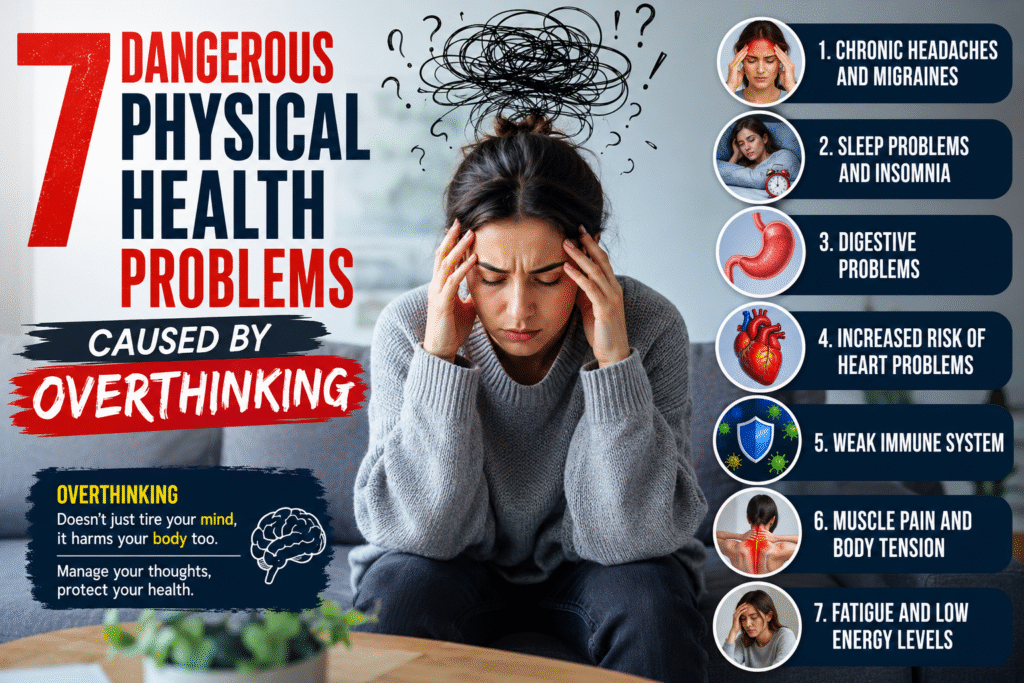
In today’s fast-moving world, overthinking has become a common habit for millions of people. Whether it’s worrying about work, relationships, money, health, or the future, many people spend hours trapped in endless thoughts and negative scenarios. While occasional thinking and problem-solving are normal, constant overthinking can seriously damage both mental and physical health.
Most people associate overthinking only with stress or anxiety, but few realize that it can also trigger real physical symptoms in the body. Chronic stress caused by excessive thinking keeps the body in a constant “fight or flight” mode, increasing stress hormones like cortisol and adrenaline. Over time, this can affect sleep, digestion, heart health, immunity, and even brain function.
If you often feel mentally exhausted, physically drained, or unable to relax, your body may already be suffering from the effects of overthinking.
In this article, we will explore 7 dangerous physical health problems caused by overthinking and practical ways to regain control of your mind and body.
Table of Contents
What Is Overthinking?
Overthinking means repeatedly analyzing, worrying, or replaying situations in your mind excessively. It usually involves:
- Constant worrying about the future
- Replaying past mistakes
- Imagining worst-case scenarios
- Difficulty making decisions
- Obsessing over small problems
Overthinking may feel like you are solving problems, but in reality, it often increases stress and emotional exhaustion.
How Overthinking Affects the Body
When you overthink, your brain interprets stress as a threat. This activates the nervous system and releases stress hormones.
Your body responds by:
- Increasing heart rate
- Tightening muscles
- Raising blood pressure
- Disturbing digestion
- Reducing sleep quality
- Weakening immunity
If this continues for weeks or months, physical health problems may develop.
1. Chronic Headaches and Migraines
One of the most common physical symptoms of overthinking is frequent headaches.
Stress and mental tension tighten the muscles around the neck, shoulders, and scalp. This tension can lead to:
- Tension headaches
- Migraines
- Pressure around the forehead
- Eye strain
- Sensitivity to light
People who constantly overanalyze situations often experience headaches during stressful periods.
Why It Happens
Overthinking keeps the brain overstimulated. Increased stress hormones affect blood vessels and muscle tension, triggering headaches.
What You Can Do
- Practice deep breathing exercises
- Reduce screen time
- Sleep regularly
- Stay hydrated
- Take short breaks during work
2. Sleep Problems and Insomnia
Do you lie awake at night thinking about conversations, mistakes, or future worries?
Overthinking is one of the biggest causes of poor sleep and insomnia.
People who overthink often struggle with:
- Difficulty falling asleep
- Waking up multiple times
- Restless sleep
- Night anxiety
- Morning fatigue
Why It Happens
Your brain remains highly active even when your body is tired. Stress hormones prevent the nervous system from relaxing properly.
Poor sleep further increases anxiety and creates a harmful cycle:
Overthinking → Poor Sleep → More Stress → More Overthinking
How to Improve Sleep
- Avoid mobile phones before bed
- Practice meditation
- Maintain a fixed sleep schedule
- Avoid caffeine late at night
- Listen to calming music
3. Digestive Problems
The gut and brain are closely connected. Overthinking and stress can directly affect digestion.
Many people experience:
- Stomach pain
- Acidity
- Bloating
- Constipation
- Diarrhea
- Irritable bowel symptoms
Stress can disrupt healthy digestion and increase stomach acid production.
Why It Happens
When the body is stressed, it prioritizes survival over digestion. Blood flow reduces to the digestive system, slowing digestive function.
This is why stressful situations often cause stomach discomfort.
Ways to Protect Digestive Health
- Eat slowly and mindfully
- Avoid excessive junk food
- Drink enough water
- Include fiber-rich foods
Practice stress management techniques
4. Increased Risk of Heart Problems
Long-term overthinking can affect cardiovascular health.
Constant stress may lead to:
- High blood pressure
- Increased heart rate
- Chest tightness
- Higher risk of heart disease
Studies show that chronic stress increases inflammation and pressure on the heart.
Warning Signs
Seek medical attention if you experience:
- Chest pain
- Shortness of breath
- Severe dizziness
- Irregular heartbeat
Healthy Habits for Heart Health
- Exercise regularly
- Walk daily
- Reduce processed food
- Practice relaxation exercises
Get proper sleep
5. Weak Immune System
People who constantly overthink often notice they get sick more frequently.
Chronic stress weakens the immune system, making the body more vulnerable to:
- Viral infections
- Seasonal flu
- Fatigue
- Slow healing
- Inflammation
Why It Happens
High cortisol levels suppress immune function over time.
When stress becomes chronic, the body struggles to fight illness efficiently.
Ways to Strengthen Immunity
- Eat nutrient-rich foods
- Exercise moderately
- Sleep 7–8 hours
- Spend time outdoors
- Reduce stress triggers
6. Muscle Pain and Body Tension
Overthinking often causes the body to stay tense for long periods.
This can lead to:
- Neck pain
- Shoulder stiffness
- Back pain
- Jaw clenching
- Muscle fatigue
Many people do not realize their physical pain is connected to emotional stress.
Why Stress Causes Muscle Tension
The body automatically tightens muscles during stress as part of the fight-or-flight response.
When stress never fully disappears, muscles remain tight and painful.
Relief Tips
- Stretch daily
- Try yoga
- Get regular movement
- Use warm baths
Practice posture correction
7. Fatigue and Low Energy Levels
Mental exhaustion eventually becomes physical exhaustion.
Overthinking drains emotional energy and makes daily tasks feel difficult.
Common symptoms include:
- Constant tiredness
- Lack of motivation
- Brain fog
- Difficulty concentrating
- Feeling physically weak
Why It Happens
Your brain consumes enormous energy while constantly processing stress and worries.
Poor sleep and high cortisol levels further reduce energy levels.
How to Recover Energy
- Take breaks from stressful activities
- Exercise lightly
- Spend time in nature
- Reduce multitasking
Practice mindfulness
Signs for Physical health problems caused by overthinking
You may be suffering from physical stress symptoms if you experience:
- Frequent headaches
- Chest tightness
- Digestive discomfort
- Constant fatigue
- Poor sleep
- Muscle tension
- Fast heartbeat
- Low immunity
Ignoring these signs may worsen both mental and physical health over time.
How to Stop Overthinking Naturally
1. Practice Mindfulness
Focus on the present moment instead of future worries.
2. Exercise Regularly
Physical activity reduces stress hormones and improves mood.
3. Limit Negative Content
Reduce exposure to stressful news and social media.
4. Write Down Your Thoughts
Journaling helps organize anxious thoughts.
5. Create a Healthy Routine
Consistent sleep, meals, and exercise improve emotional stability.
6. Talk to Someone
Sharing worries with trusted people can reduce mental pressure.
7. Seek Professional Help
If overthinking severely affects your life, speaking with a mental health professional can help.
When Should You See a Doctor?
Consult a healthcare professional if:
- Physical symptoms become severe
- Anxiety affects daily life
- Sleep problems continue for weeks
- Chest pain occurs
- Stress causes panic attacks or depression
Professional support can prevent long-term complications.
Final Thoughts
Overthinking may seem harmless at first, but chronic mental stress can silently damage physical health. From headaches and insomnia to digestive issues and heart problems, the body often reflects what the mind experiences.
The good news is that small daily changes can make a big difference. Prioritizing sleep, exercise, mindfulness, healthy eating, and stress management can help protect both your mental and physical well-being.
Learning how to manage overthinking is not just important for peace of mind — it is essential for a healthier life.
FAQs related to Physical health problems caused by overthinking
Can overthinking cause physical pain?
Yes. Overthinking can cause headaches, muscle tension, stomach problems, fatigue, and chest tightness due to chronic stress.
Is overthinking linked to anxiety?
Yes. Overthinking is strongly connected to anxiety and chronic stress disorders.
Can stress from overthinking affect the heart?
Long-term stress may increase blood pressure and heart rate, potentially affecting heart health over time.
Why does overthinking make it hard to sleep?
Overthinking keeps the brain highly active, preventing relaxation and reducing sleep quality.
How can I stop overthinking naturally?
Mindfulness, exercise, journaling, meditation, better sleep habits, and reducing stress triggers can help manage overthinking.
Related Articles:-
15 High-Protein Indian Breakfast Ideas for Energy, Muscle Gain & Weight Loss
15 Powerful Wellness Habits for Gen Z Adults that how to Boost Mental and Physical Health
How to Stop Doomscrolling at Night: 10 Proven Tips for Better Sleep
7 Surprising Reasons Why Your Skin Gets Oily and Acne-Prone in Summer (And How to Fix It)
10 Worst Foods to Avoid in Summer That Drain Your Energy and Cause Dehydration
[…] 7 Dangerous Physical Health Problems Caused by Overthinking […]
[…] 7 Dangerous Physical Health Problems Caused by Overthinking […]
[…] 7 Dangerous Physical Health Problems Caused by Overthinking […]