
Modern life moves fast. Between work pressure, family responsibilities, social media overload, and endless notifications, many people finish the week feeling mentally exhausted. Stress can slowly drain your energy, affect your mood, disturb sleep, and even impact physical health.
If you often feel emotionally tired by the weekend, your mind may be asking for a reset.
The good news is that you don’t need expensive therapy retreats or long vacations to feel mentally refreshed. Small but intentional habits can help your brain recover, improve emotional balance, and restore inner peace. In this article, you’ll discover 7 powerful ways to reset your mind after a stressful week and feel calmer, happier, and more focused.
Table of Contents
Why Mental Reset Is Important
Stress is a natural response, but chronic stress can become dangerous. According to World Health Organization (WHO), prolonged stress can affect both mental and physical well-being.
Some common signs that your mind needs a reset include:
- Constant overthinking
- Mental exhaustion
- Irritability or mood swings
- Poor sleep quality
- Lack of motivation
- Anxiety and negative thoughts
- Difficulty concentrating
Ignoring these signs may lead to burnout, emotional fatigue, and reduced productivity.
That’s why taking time to mentally recharge every week is essential.
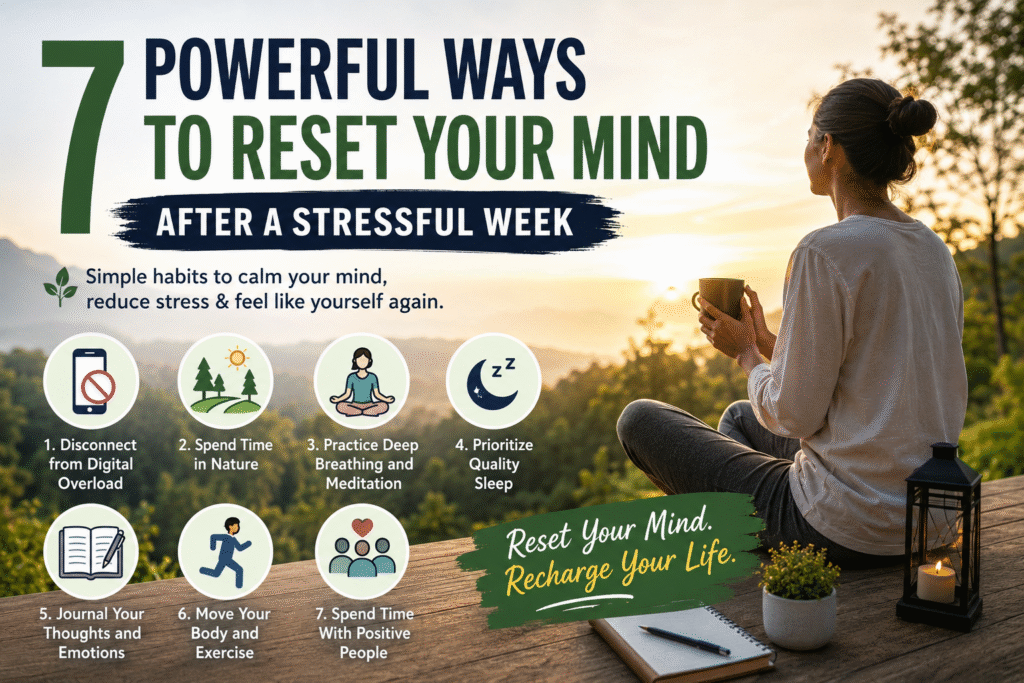
1. Disconnect From Digital Overload to reset your mind after a stressful week
Why It Helps
One of the biggest causes of mental fatigue today is excessive screen time. Endless scrolling, work emails, and social media comparisons overstimulate the brain.
A digital detox helps your mind slow down and recover.
Research from Harvard Medical School suggests that constant digital stimulation increases stress and reduces attention span.
How to Do It
Try these simple habits:
- Turn off unnecessary notifications
- Avoid social media for a few hours
- Keep your phone away before bedtime
- Spend one evening screen-free
- Replace scrolling with reading or walking
Even a short digital break can calm your nervous system.
2. Spend Time in Nature
Why Nature Resets the Brain
Nature has a powerful calming effect on the human mind. Fresh air, greenery, sunlight, and open spaces help reduce stress hormones and improve emotional health.
Studies from American Psychological Association show that spending time outdoors can improve mood and lower anxiety levels.
Easy Ways to Connect With Nature
You don’t need mountains or forests. Simple activities work too:
- Morning walks in a park
- Sitting in sunlight
- Gardening
- Watching sunsets
- Walking barefoot on grass
Nature helps your brain escape mental clutter and feel refreshed naturally.
3. Practice Deep Breathing and Meditation
The Power of Mindfulness
When stress builds up, your breathing often becomes shallow and fast. Deep breathing sends calming signals to your brain and helps relax your body.
Meditation also improves emotional control and mental clarity.
Simple 5-Minute Breathing Exercise
Try this:
- Sit comfortably
- Close your eyes
- Inhale slowly for 4 seconds
- Hold for 4 seconds
- Exhale slowly for 6 seconds
- Repeat for 5 minutes
This simple habit can instantly reduce stress.
Benefits of Meditation
Regular meditation may help:
- Reduce anxiety
- Improve focus
- Calm overthinking
- Enhance emotional stability
- Improve sleep quality
Apps like Headspace and Calm can help beginners start mindfulness practice.
4. Prioritize Quality Sleep to reset your mind after a stressful week
Why Sleep Matters for Mental Health
Your brain repairs and resets itself during sleep. Poor sleep increases stress, irritability, and mental fatigue.
According to Sleep Foundation, adults need around 7–9 hours of quality sleep for proper mental recovery.
Tips for Better Sleep
To mentally recharge faster:
- Sleep at the same time daily
- Avoid caffeine late at night
- Reduce screen exposure before bed
- Keep your room cool and dark
- Listen to calming music
Good sleep is one of the most effective ways to reset your mind naturally.
5. Journal Your Thoughts and Emotions
Why Journaling Works
Many people carry emotional stress silently. Writing your thoughts down helps release mental pressure and organize emotions.
Journaling can:
- Reduce overthinking
- Improve self-awareness
- Lower anxiety
- Increase gratitude
- Help solve problems clearly
What You Can Write About
You don’t need perfect writing skills. Just be honest.
Try writing:
- What stressed you this week
- Things you’re grateful for
- Lessons you learned
- Goals for next week
- Positive affirmations
Even 10 minutes of journaling can make your mind feel lighter.
6. Move Your Body and Exercise
Exercise Is a Natural Stress Reliever
Physical activity doesn’t just improve fitness — it also boosts mental health.
Exercise releases endorphins, also known as “feel-good hormones,” which naturally improve mood and reduce stress.
According to Mayo Clinic, regular physical activity helps reduce symptoms of stress and anxiety.
Best Exercises for Mental Reset
You don’t need intense workouts. Simple movement works well:
- Walking
- Yoga
- Stretching
- Cycling
- Dancing
- Light gym sessions
Yoga, especially, combines breathing and movement for deep relaxation.
Quick Mental Refresh Routine
Try this simple weekend routine:
- 20-minute walk
- 10-minute stretching
- 5-minute deep breathing
This combination can significantly improve your mood.
7. Spend Time With Positive People
Human Connection Heals Stress
Isolation increases emotional stress. Spending time with supportive and positive people can instantly improve your mental state.
Meaningful conversations help release emotional tension and create feelings of comfort and safety.
Healthy Ways to Reconnect
- Meet close friends
- Talk with family
- Share your feelings honestly
- Laugh together
- Avoid toxic conversations
Strong social connections are essential for emotional wellness.
Bonus Tips to Mentally Recharge Faster
Here are a few extra habits that can help reset your mind even more effectively:
Listen to Calming Music
Soft instrumental or nature sounds can reduce stress and improve relaxation.
Declutter Your Space
A messy environment often creates mental chaos. Cleaning your room or workspace can help your mind feel calmer.
Eat Brain-Healthy Foods
Nutrition also affects mental health. Include:
- Fruits
- Nuts
- Green vegetables
- Omega-3-rich foods
- Plenty of water
Practice Gratitude
Focusing on positive things shifts your mindset away from stress and negativity.
Signs Your Mind Is Becoming Healthier
After practicing these habits consistently, you may notice:
- Better mood
- Improved focus
- Reduced anxiety
- Better sleep
- More emotional balance
- Increased motivation
- Feeling mentally lighter
Mental wellness improves slowly through small daily actions.
Final Thoughts
Stressful weeks are unavoidable, but staying mentally exhausted doesn’t have to become your normal life.
Your brain needs regular care, rest, and recovery just like your body does. By disconnecting from digital overload, sleeping well, exercising, meditating, journaling, and spending time with positive people, you can reset your mind and feel emotionally refreshed.
The key is consistency. Even small habits practiced weekly can create powerful long-term changes in your mental health.
Start with one or two habits today, and gradually build a healthier, calmer lifestyle.
FAQs about how to reset your mind after a stressful week
How can I reset my mind quickly after stress?
You can quickly calm your mind through deep breathing, short walks in nature, meditation, and reducing screen time.
How long does mental recovery take?
Mental recovery depends on stress levels, sleep quality, and lifestyle habits. Small improvements can happen within days of healthy routines.
Does exercise really help reduce stress?
Yes. Exercise releases endorphins that naturally improve mood and reduce stress hormones.
Can journaling improve mental health?
Yes. Journaling helps organize thoughts, release emotions, and reduce overthinking.
What is the best weekend activity for mental relaxation? Nature walks, meditation, quality sleep, and spending time with loved ones are highly effective for mental relaxation.
Related articles:-
7 Serious Health Risks of Sitting All Day
7 Dangerous Physical Health Problems Caused by Overthinking
15 High-Protein Indian Breakfast Ideas for Energy, Muscle Gain & Weight Loss
15 Powerful Wellness Habits for Gen Z Adults that how to Boost Mental and Physical Health
How to Stop Doomscrolling at Night: 10 Proven Tips for Better Sleep
[…] 7 Powerful Ways to Reset Your Mind After a Stressful Week […]
[…] 7 Powerful Ways to Reset Your Mind After a Stressful Week […]