
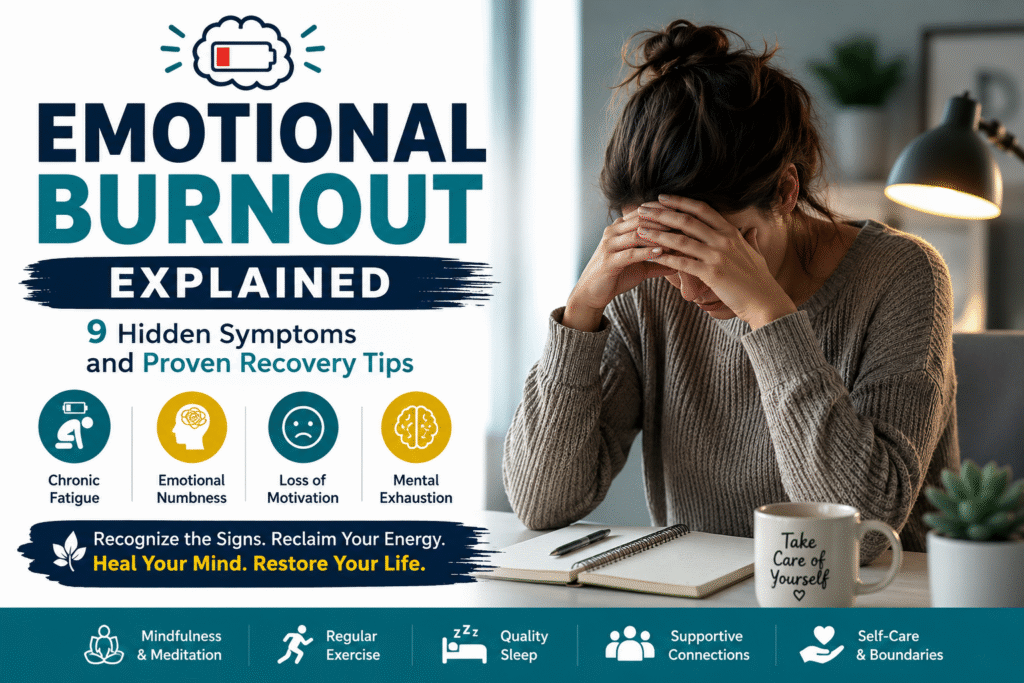
Modern life often demands more from us than ever before. Between work deadlines, family responsibilities, financial pressures, and constant digital connectivity, many people find themselves emotionally drained without realizing what’s happening.
While physical exhaustion is easy to identify, emotional burnout often develops quietly. It can affect your mood, relationships, productivity, and overall quality of life. Unfortunately, many people dismiss the warning signs until they become overwhelming.
If you’ve been feeling mentally exhausted, detached, or emotionally numb, this guide will help you understand emotional burnout, recognize its hidden symptoms, and learn practical strategies to recover.
Table of Contents
What Is Emotional Burnout?
Emotional burnout is a state of chronic emotional, mental, and physical exhaustion caused by prolonged stress. It occurs when your emotional resources become depleted, making it difficult to cope with everyday challenges.
Unlike temporary stress, emotional burnout doesn’t disappear after a good night’s sleep or a relaxing weekend. It develops gradually and can significantly impact your mental health, relationships, and work performance. Burnout is commonly associated with demanding jobs, but it can also affect parents, caregivers, students, entrepreneurs, and anyone facing prolonged emotional strain.
Why Emotional Burnout Happens!
Several factors contribute to emotional burnout, including:
- Chronic workplace stress
- Excessive responsibilities
- Lack of work-life balance
- Relationship difficulties
- Financial pressure
- Caregiving responsibilities
- Poor sleep habits
- Lack of social support
- Perfectionism
- Constant exposure to negative news or social media
The more stress accumulates without adequate recovery, the greater the risk of burnout.
9 Hidden Symptoms of Emotional Burnout
Many symptoms of burnout are subtle and often mistaken for normal stress. Here are nine warning signs you should never ignore.
1. Constant Fatigue Even After Rest
One of the earliest signs of emotional burnout is persistent fatigue.
You may sleep for eight hours and still wake up feeling exhausted. The tiredness isn’t just physical—it feels like your emotional energy has been drained.
Simple daily tasks may start feeling overwhelming, and motivation becomes increasingly difficult to maintain.
People experiencing burnout often describe feeling emotionally disconnected.
Activities that once brought joy no longer feel exciting. You may stop reacting emotionally to positive or negative events and feel detached from people around you.
This emotional numbness is often the mind’s way of protecting itself from prolonged stress.
3. Increased Irritability
Small inconveniences suddenly feel unbearable.
You may find yourself becoming impatient with coworkers, family members, or friends over minor issues. Increased frustration and anger are common indicators that your emotional reserves are running low.
4. Difficulty Concentrating
Burnout affects cognitive performance.
You might struggle to focus during conversations, forget important details, or find it difficult to complete tasks that were once routine.
Mental fog and poor concentration can significantly impact work productivity and daily functioning.
5. Loss of Motivation
Another hidden symptom is a noticeable decline in motivation.
You may begin procrastinating more frequently or lose interest in goals that once inspired you. Even important responsibilities may feel meaningless or exhausting.
This lack of enthusiasm often signals emotional exhaustion rather than laziness.
6. Feeling Cynical or Negative
Burnout can change the way you view the world.
People may become increasingly pessimistic, skeptical, or emotionally detached from their work and relationships.
You might find yourself expecting the worst outcomes or feeling hopeless about future improvements.
7. Withdrawal from Social Activities
When emotional energy becomes depleted, social interactions can feel draining.
Many people experiencing burnout begin avoiding social gatherings, phone calls, and even close relationships.
Isolation may provide temporary relief but often worsens emotional distress over time.
8. Physical Symptoms Without a Clear Cause
Emotional burnout often manifests physically.
Common physical symptoms include:
- Headaches
- Muscle tension
- Digestive problems
- Frequent illnesses
- Sleep disturbances
- Increased heart rate
Chronic stress affects nearly every system in the body, making physical symptoms surprisingly common.
9. Feeling Trapped or Helpless
One of the most serious signs of burnout is feeling stuck.
You may believe that no matter how hard you try, nothing will improve. This sense of helplessness can increase the risk of anxiety and depression if left unaddressed.
Recognizing this symptom early is crucial for recovery.
The Difference Between Stress and Burnout
Although stress and burnout are related, they are not the same.
Stress:
- Characterized by over-engagement
- Emotions remain intense
- Energy levels fluctuate
- Usually temporary
Burnout:
- Characterized by disengagement
- Emotional numbness develops
- Energy remains depleted
- Feels chronic and persistent
Stress can eventually lead to burnout when recovery periods are insufficient.
How Emotional Burnout Affects Your Health
Ignoring burnout can have serious consequences.
Long-term emotional exhaustion may contribute to:
- Anxiety disorders
- Depression
- High blood pressure
- Sleep disorders
- Weakened immune function
- Relationship conflicts
- Reduced work performance
- Increased risk of substance misuse
Addressing burnout early can prevent these complications and improve overall well-being.
Proven Recovery Tips for Emotional Burnout
The good news is that burnout can be managed and reversed with intentional lifestyle changes.
1. Prioritize Quality Sleep
Sleep is one of the most effective recovery tools available.
Aim for:
- 7–9 hours of sleep nightly
- Consistent sleep schedules
- Reduced screen time before bed
- A comfortable sleep environment
Restorative sleep helps regulate mood and replenish mental energy.
2. Set Healthy Boundaries
Many people experience burnout because they constantly say “yes” to additional responsibilities.
Learn to:
- Decline unnecessary commitments
- Limit overtime work
- Protect personal time
- Communicate your needs clearly
Healthy boundaries preserve emotional resources.
3. Take Regular Breaks
Your brain needs recovery periods throughout the day.
Simple practices include:
- Short walks
- Stretching breaks
- Deep breathing exercises
- Stepping away from screens
Even brief pauses can reduce stress and improve mental clarity.
4. Engage in Physical Activity
Exercise is a powerful tool for emotional recovery.
Benefits include:
- Reduced stress hormones
- Improved mood
- Better sleep quality
- Increased energy levels
You don’t need intense workouts. Walking, yoga, cycling, or dancing can be highly effective.
5. Reconnect with Supportive People
Strong social connections help buffer stress.
Consider:
- Talking to trusted friends
- Spending time with family
- Joining support groups
- Seeking professional counseling
Sharing your experiences can reduce emotional burdens and provide perspective.
6. Practice Mindfulness
Mindfulness helps break the cycle of chronic stress.
Simple techniques include:
- Meditation
- Deep breathing
- Gratitude journaling
- Mindful walking
These practices encourage emotional regulation and reduce mental overwhelm.
7. Reduce Digital Overload
Constant notifications and social media exposure can increase emotional fatigue.
Try:
- Limiting screen time
- Turning off nonessential notifications
- Scheduling technology-free periods
- Avoiding doomscrolling
Digital boundaries create more mental space for recovery.
8. Reevaluate Your Priorities
Burnout often signals a mismatch between your values and daily activities.
Ask yourself:
- What truly matters to me?
- Which responsibilities can I delegate?
- What activities restore my energy?
Aligning your life with your priorities can significantly reduce emotional strain.
9. Seek Professional Help When Needed
If symptoms persist or interfere with daily life, consulting a mental health professional can be extremely beneficial.
Therapists can help identify underlying stressors and develop personalized coping strategies.
Seeking support is a proactive step toward recovery, not a sign of weakness.
How Long Does Burnout Recovery Take?
Recovery timelines vary depending on the severity of burnout and the steps taken to address it.
Some people notice improvements within a few weeks, while others may need several months of consistent lifestyle changes.
The key is patience and self-compassion. Recovery is rarely immediate, but progress is possible with consistent effort.
Final Thoughts
Emotional burnout is more than feeling tired or stressed. It is a serious state of emotional exhaustion that can affect every aspect of life if left unchecked.
By recognizing the hidden symptoms early and implementing proven recovery strategies, you can regain emotional balance, improve mental health, and restore your sense of well-being.
Remember, burnout is not a sign of weakness. It is often a signal that your mind and body need rest, support, and healthier boundaries.
Pay attention to the warning signs, prioritize self-care, and take small but meaningful steps toward recovery. Your emotional health deserves the same care and attention as your physical health.
FAQs
1. What are the first signs of emotional burnout?
Persistent fatigue, irritability, lack of motivation, emotional numbness, and difficulty concentrating are common early signs.
2. Can emotional burnout affect physical health?
Yes. Burnout can contribute to headaches, sleep problems, digestive issues, weakened immunity, and increased stress-related illnesses.
3. How long does it take to recover from emotional burnout?
Recovery varies from person to person. Some may recover within weeks, while others require several months of lifestyle changes and support.
4. Is emotional burnout the same as depression?
No. Burnout is typically related to chronic stress, while depression is a broader mental health condition. However, burnout can increase the risk of developing depression.5. What is the best way to prevent emotional burnout?
Maintaining healthy boundaries, prioritizing sleep, exercising regularly, managing stress, and seeking support when needed can help prevent burnout.
Related Articles:-
Feeling Distracted All the Time? 7 Signs You Need a Dopamine Detox
15 Warning Signs Your Body Gives Before a Serious Illness
Why Modern Lifestyle Is Making People Chronically Tired and How to Recover?