
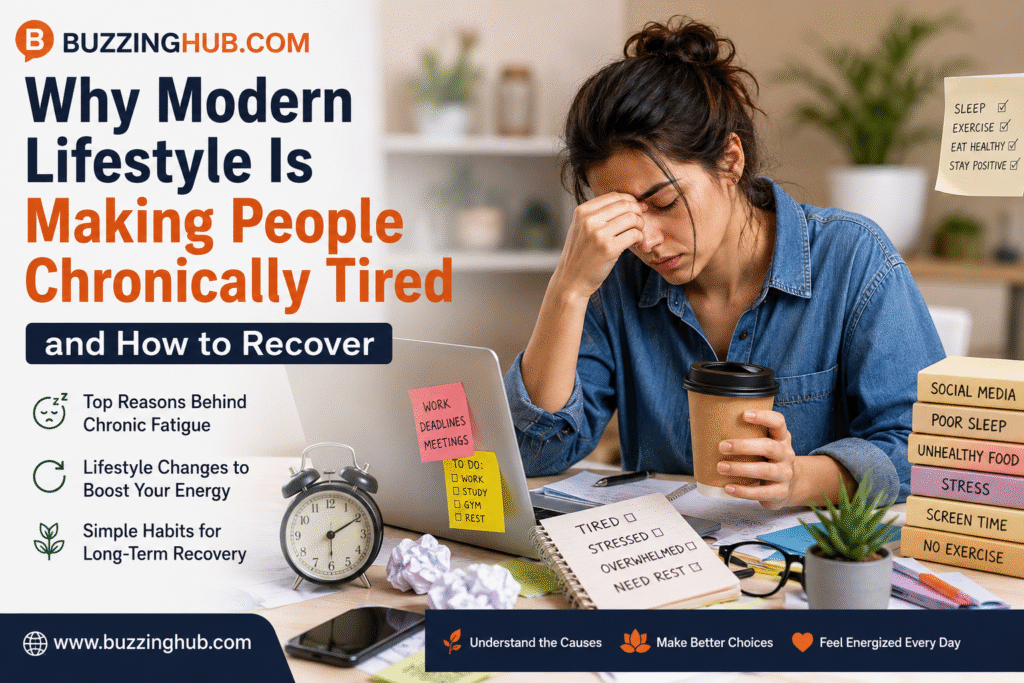
Do you wake up tired even after sleeping for seven or eight hours? Do you depend on multiple cups of coffee just to get through the day? If so, you’re not alone.
Chronic tiredness has become one of the most common health complaints in modern society. Millions of people struggle with low energy, brain fog, poor concentration, and a constant feeling of exhaustion. While many assume that aging or a busy schedule is to blame, the real culprit is often the modern lifestyle itself.
Today’s world is faster, more connected, and more demanding than ever before. Smartphones keep us plugged in 24/7, work follows us home, processed foods dominate our diets, and stress has become a normal part of everyday life.
The result? A growing epidemic of chronic fatigue. In this article, we’ll explore why modern lifestyles are draining our energy and, more importantly, what you can do to recover and feel energized again.
Table of Contents
What Is Chronic Fatigue?
Chronic fatigue is more than feeling sleepy after a late night. It is a persistent state of physical, mental, or emotional exhaustion that doesn’t improve significantly with normal rest.
Common symptoms include:
- Feeling tired throughout the day
- Difficulty concentrating
- Brain fog
- Reduced motivation
- Frequent headaches
- Mood changes
- Poor sleep quality
- Decreased productivity
When these symptoms continue for weeks or months, they can significantly affect your quality of life.
1. Poor Sleep Quality Is the Biggest Energy Killer
Most adults know they need sleep, but many underestimate the importance of sleep quality.
Modern habits such as:
- Late-night scrolling
- Streaming shows before bed
- Working late on laptops
- Irregular sleep schedules
can interfere with the body’s natural circadian rhythm.
The blue light emitted by screens suppresses melatonin, the hormone responsible for sleep. As a result, people often struggle to fall asleep and enter deep restorative sleep stages.
How to Recover
- Maintain a consistent sleep schedule
- Avoid screens 60 minutes before bed
- Keep your bedroom dark and cool
- Limit caffeine after lunchtime
2. Excessive Screen Time Is Draining Your Brain
The average person spends several hours daily looking at screens.
Constant exposure to:
- Social media
- Emails
- Notifications
- News updates
keeps the brain in a state of continuous stimulation.
This mental overload leads to decision fatigue, reduced focus, and emotional exhaustion.
Additionally, doomscrolling creates anxiety and stress, making it harder for the brain to relax.
How to Recover
- Schedule screen-free periods
- Disable unnecessary notifications
- Follow the 20-20-20 rule
- Take regular digital detox days
3. Chronic Stress Keeps Your Body in Survival Mode
Your body is designed to handle short-term stress. However, modern life exposes us to continuous stressors:
- Work pressure
- Financial concerns
- Family responsibilities
- Information overload
When stress becomes chronic, cortisol levels remain elevated.
Over time, this can cause:
- Fatigue
- Poor sleep
- Weight gain
- Reduced immunity
- Mood disorders
How to Recover
- Practice meditation
- Try deep breathing exercises
- Spend time in nature
- Prioritize relaxation activities
Even 10 minutes of mindfulness daily can help reduce stress levels.
4. Lack of Physical Activity Reduces Energy
Many people believe exercise consumes energy. In reality, regular physical activity helps generate more energy.
Modern lifestyles involve:
- Sitting at desks
- Driving instead of walking
- Long hours in front of computers
A sedentary lifestyle slows circulation, weakens muscles, and decreases stamina.
Research consistently shows that regular exercise improves energy levels and reduces fatigue.
How to Recover
Aim for:
- 30 minutes of walking daily
- Strength training 2–3 times weekly
- Stretching breaks every hour
Small movements throughout the day make a significant difference.
5. Processed Foods Are Fueling Energy Crashes
Food is your body’s fuel. Unfortunately, modern diets are often filled with:
- Sugary snacks
- Refined carbohydrates
- Fast food
- Processed beverages
These foods cause rapid spikes and crashes in blood sugar levels.
As a result, you may feel energetic briefly and then experience extreme tiredness afterward.
How to Recover
Focus on:
- Fruits and vegetables
- Whole grains
- Healthy fats
- Lean proteins
- Nuts and seeds
Balanced meals provide stable energy throughout the day.
6. Dehydration Is More Common Than You Think
Even mild dehydration can cause:
- Fatigue
- Headaches
- Poor concentration
- Mood changes
Many people mistake thirst for hunger or simply ignore it during busy days.
How to Recover
- Drink water consistently throughout the day
- Carry a reusable water bottle
- Eat water-rich foods such as cucumber and watermelon
A simple increase in water intake can dramatically improve energy levels.
7. Information Overload Is Mentally Exhausting
Humans were not designed to process endless streams of information.
Every day we consume:
- News headlines
- Social media content
- Emails
- Messages
- Videos
This constant influx overwhelms the brain and contributes to mental fatigue.
How to Recover
- Limit news consumption
- Schedule social media usage
- Focus on one task at a time
- Create technology-free zones
Your mind needs downtime just as much as your body.
8. Social Isolation and Lack of Meaningful Connections
Ironically, despite being digitally connected, many people feel emotionally disconnected.
Meaningful social interactions help reduce stress and improve emotional well-being.
Loneliness has been linked to:
- Fatigue
- Depression
- Anxiety
- Poor sleep
How to Recover
- Spend time with friends and family
- Join community groups
- Participate in hobbies
- Have face-to-face conversations regularly
Human connection is a powerful source of emotional energy.
9. Multitasking Is Secretly Exhausting You
Modern culture often celebrates multitasking.
However, switching between tasks forces the brain to constantly refocus, increasing mental fatigue.
Studies show that multitasking reduces efficiency and increases stress.
How to Recover
Try:
- Time-blocking
- Single-tasking
- Prioritizing important work
- Taking scheduled breaks
Working smarter often creates more energy than working harder.
10. Ignoring Recovery Time Leads to Burnout
Many people treat rest as a reward rather than a necessity.
Yet the body requires recovery to function optimally.
Without adequate recovery, fatigue accumulates and eventually leads to burnout.
How to Recover
Make time for:
- Quality sleep
- Relaxation
- Hobbies
- Vacations
- Exercise recovery
Recovery is not laziness; it’s a biological requirement.
Signs That Your Lifestyle Is Causing Chronic Fatigue
You may be experiencing lifestyle-related fatigue if you:
- Wake up tired most mornings
- Depend heavily on caffeine
- Feel mentally drained after screen use
- Struggle to focus
- Experience frequent stress
- Have poor sleep quality
- Feel exhausted despite normal medical tests
Recognizing these warning signs early can prevent more serious health issues.
A Simple Daily Energy Recovery Plan
Morning
- Wake up at the same time daily
- Drink water immediately
- Get sunlight exposure
- Eat a protein-rich breakfast
Afternoon
- Take short movement breaks
- Stay hydrated
- Eat balanced meals
Evening
- Reduce screen time
- Avoid heavy meals late at night
- Practice relaxation techniques
Night
- Maintain a consistent bedtime
- Keep your bedroom cool and dark
- Aim for 7–9 hours of quality sleep
Following these habits consistently can significantly improve energy levels within weeks.
Conclusion
Modern life offers incredible convenience, but it also creates conditions that leave many people chronically tired. Poor sleep, excessive screen time, chronic stress, sedentary habits, unhealthy diets, and information overload all contribute to persistent fatigue.
The good news is that recovery doesn’t require extreme measures. Small, sustainable lifestyle changes can dramatically improve your energy, mood, productivity, and overall health.
If you’ve been feeling exhausted for months, start by addressing one habit at a time. Prioritize sleep, move your body, nourish yourself with healthy foods, manage stress, and create healthy boundaries with technology.
Your energy is one of your most valuable resources. Protecting it today can help you build a healthier, happier, and more productive future.
FAQs
Q1. Why am I always tired even after sleeping enough?
Poor sleep quality, stress, screen time, dehydration, and unhealthy eating habits can cause fatigue despite adequate sleep duration.
Q2. Can screen time make you feel tired?
Yes. Excessive screen exposure can strain the eyes, disrupt sleep, and contribute to mental exhaustion.
Q3. How can I recover from chronic fatigue naturally?
Improve sleep quality, exercise regularly, manage stress, eat nutrient-dense foods, stay hydrated, and reduce excessive screen use.
Q4. What foods help increase energy naturally?
Whole grains, fruits, vegetables, nuts, seeds, eggs, fish, and lean proteins can support stable energy levels.
Q5. When should I see a doctor for fatigue?
If fatigue persists for several weeks despite lifestyle improvements or is accompanied by other concerning symptoms, consult a healthcare professional.
Related Articles:-
10 Shocking Ways Screen Time Impacts Children’s Health, Brain and Eyes
7 Ayurvedic Morning Drinks for Better Digestion and Energy
15 Powerful Wellness Habits for Gen Z Adults that how to Boost Mental and Physical Health
15 High-Protein Indian Breakfast Ideas for Energy, Muscle Gain & Weight Loss
7 Surprising Reasons Why Your Skin Gets Oily and Acne-Prone in Summer (And How to Fix It)