
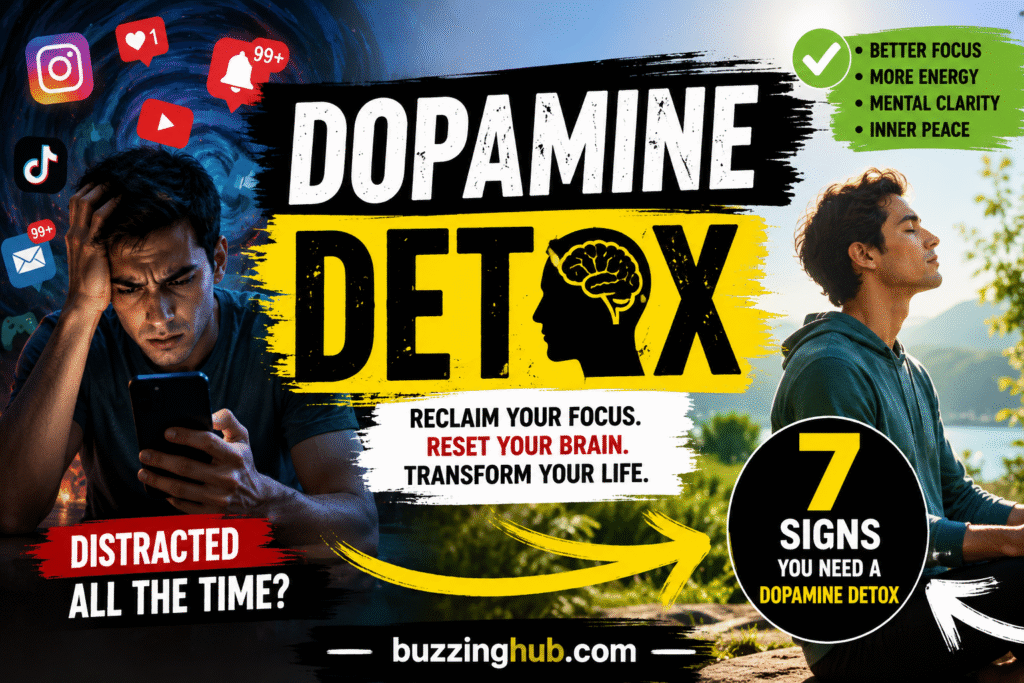
In today’s hyperconnected world, distractions are everywhere. Social media notifications, endless short videos, online shopping, streaming platforms, and constant digital stimulation compete for our attention every second of the day.
If you’ve ever found yourself picking up your phone without realizing it, struggling to focus on simple tasks, or feeling bored when you’re not entertained, you’re not alone.
Many experts believe that excessive exposure to highly stimulating activities can contribute to what people commonly call “dopamine overload.” While the term “dopamine detox” has become popular online, it’s important to understand that you cannot actually detox dopamine from your body. Dopamine is a natural neurotransmitter that plays a vital role in motivation, learning, pleasure, and reward.
A dopamine detox simply means reducing overstimulating behaviors so your brain can become less dependent on constant rewards and instant gratification.
If you’re feeling distracted all the time, here are seven signs that a dopamine detox may help you regain focus and mental clarity.
Table of Contents
What Is a Dopamine Detox?
A dopamine detox is a temporary reduction in activities that provide quick and frequent rewards.
These activities may include:
- Endless social media scrolling
- Video gaming for hours
- Constant phone checking
- Binge-watching shows
- Online shopping
- Excessive junk food consumption
The goal is not to eliminate dopamine but to reduce excessive stimulation that may make everyday activities seem less rewarding.
When practiced correctly, a dopamine detox can help improve focus, productivity, self-control, and overall well-being.
1. You Check Your Phone Constantly Without a Reason
One of the strongest signs of digital overstimulation is reaching for your phone automatically.
Do you:
- Unlock your phone every few minutes?
- Open social media apps without thinking?
- Feel compelled to check notifications immediately?
This habit often develops because your brain begins expecting frequent rewards from messages, likes, videos, and updates. Over time, your attention becomes fragmented, making it harder to stay focused on important tasks.
What to Do
Try creating phone-free periods throughout the day.
Start with:
- No phone during meals
- No phone for the first hour after waking
- No phone 30 minutes before bed
These small changes can significantly reduce compulsive checking behavior.
2. You Struggle to Focus on Simple Tasks
Have you noticed that reading a book feels harder than watching short videos?
Can you sit through a meeting without checking your phone?
If your attention span feels shorter than it used to be, overstimulation could be contributing to the problem.
Constant exposure to rapid content trains your brain to seek novelty and immediate rewards.
As a result, slower activities such as reading, studying, writing, or deep work may start to feel difficult.
What to Do
Practice focused work sessions using techniques like:
- Pomodoro method
- Single-tasking
- Time blocking
The more you train your attention, the easier concentration becomes.
3. You Feel Bored Very Easily
Boredom isn’t necessarily a bad thing.
In fact, boredom often sparks creativity, problem-solving, and self-reflection.
However, if you cannot tolerate even a few minutes without entertainment, your brain may have become accustomed to constant stimulation.
Signs include:
- Watching videos while eating
- Scrolling social media during every break
- Feeling uncomfortable sitting quietly
When ordinary moments feel unbearable, a dopamine detox may help reset your relationship with stimulation.
What to Do
Allow yourself short periods of intentional boredom.
Try:
- Taking a walk without headphones
- Sitting quietly for 10 minutes
- Observing nature without distractions
You may be surprised how refreshing it feels.
4. You Lack Motivation for Important Goals
Many people believe dopamine is simply the “pleasure chemical,” but it’s actually heavily involved in motivation and goal-directed behavior.
Ironically, excessive stimulation can sometimes reduce motivation for activities that require effort.
For example:
- Studying feels exhausting
- Exercise feels difficult
- Work projects seem overwhelming
Meanwhile, scrolling social media feels effortless.
This happens because instant rewards require much less effort than meaningful long-term achievements.
What to Do
Reduce low-value distractions and create small achievable goals.
Focus on:
- One task at a time
- Daily progress rather than perfection
- Rewarding yourself after completing important work
Small wins help rebuild healthy motivation.
5. Your Sleep Quality Is Getting Worse
Poor sleep and digital overstimulation often go hand in hand.
Using devices late at night exposes your eyes to blue light and keeps your brain engaged when it should be winding down.
Common signs include:
- Difficulty falling asleep
- Late-night scrolling sessions
- Feeling tired despite sleeping enough hours
- Waking up frequently during the night
Sleep deprivation can further worsen focus, mood, and productivity.
What to Do
Create a digital sunset routine:
- Stop screen use 60 minutes before bed
- Read a physical book
- Practice meditation
- Stretch gently
Better sleep can dramatically improve mental clarity.
6. You Feel Anxious When You’re Offline
Do you feel uneasy when:
- Your phone battery dies?
- You don’t have internet access?
- You haven’t checked notifications for a while?
While staying connected is important, excessive reliance on digital stimulation can create a sense of dependency.
This anxiety often stems from fear of missing out (FOMO) and the habit of seeking constant updates.
What to Do
Schedule intentional offline time.
Start small:
- 30-minute digital breaks
- Device-free walks
- Offline hobbies
Over time, you’ll become more comfortable being disconnected.
7. Nothing Feels Exciting Anymore
One of the most overlooked signs of overstimulation is reduced enjoyment of everyday experiences.
Activities that once felt satisfying may now seem dull because your brain has become accustomed to stronger and more frequent rewards.
Examples include:
- Family conversations
- Reading books
- Exercising
- Outdoor activities
- Creative hobbies
A dopamine detox can help restore appreciation for simple pleasures.
What to Do
Spend more time engaging in activities that provide meaningful satisfaction rather than instant gratification.
Examples include:
- Learning a new skill
- Journaling
- Exercising
- Cooking healthy meals
Spending quality time with loved ones
How to Start a Dopamine Detox
You don’t need to disappear into the mountains or abandon technology completely.
Instead, focus on reducing unnecessary stimulation.
Step 1: Identify Your Biggest Distractions
Track:
- Screen time
- Social media usage
- Gaming habits
- Streaming habits
Awareness is the first step toward change.
Step 2: Set Boundaries
Examples include:
- No social media before noon
- Device-free meals
- App limits
- Scheduled work blocks
Step 3: Replace, Don’t Just Remove
Instead of scrolling, try:
- Reading
- Walking
- Meditation
- Exercise
- Journaling
Replacing habits is more effective than relying solely on willpower.
Step 4: Be Consistent Even a few hours of reduced stimulation each day can make a noticeable difference over time.
Benefits of a Dopamine Detox
People who reduce overstimulation often report:
- Better concentration
- Increased productivity
- Improved self-discipline
- Better sleep quality
- Reduced anxiety
- Greater appreciation for simple pleasures
- Enhanced motivation
Results vary from person to person, but many individuals notice positive changes within a few weeks.
Common Myths About Dopamine Detoxes
Myth 1: Dopamine Is Bad
False. Dopamine is essential for motivation, learning, and enjoyment.
Myth 2: You Can Eliminate Dopamine
False. Your body naturally produces dopamine and needs it to function properly.
Myth 3: A Single Detox Will Fix Everything
False. Long-term improvement comes from building healthier habits and reducing excessive stimulation consistently.
Frequently Asked Questions
How long should a dopamine detox last?
It can range from a few hours to several days. Many people benefit from regular daily digital detox periods.
Is dopamine detox scientifically proven?
The term itself is often misunderstood, but reducing distractions and overstimulation is supported by research on attention, habits, and behavior change.
Can a dopamine detox improve focus?
Many people report improved concentration when they reduce digital distractions and practice mindful technology use.
Can I still use my phone during a dopamine detox? Yes. The goal is moderation and intentional use, not complete avoidance.
Final Thoughts
If you’re constantly distracted, struggling to focus, or feeling unmotivated, your brain may be craving a break from endless stimulation. A dopamine detox isn’t about eliminating pleasure or avoiding technology—it’s about creating healthier boundaries with the things that consume your attention.
By recognizing these seven signs and making small changes to your daily habits, you can regain control over your focus, improve productivity, and enjoy a greater sense of mental clarity.
The modern world is designed to compete for your attention. Taking intentional steps to reduce overstimulation may be one of the most powerful investments you can make in your mental well-being.
Related Articles:-
7 Powerful Creatine Benefits for Beginners: Is Creatine Safe, When to Take It & Natural Alternatives
Why Modern Lifestyle Is Making People Chronically Tired and How to Recover?
15 Warning Signs Your Body Gives Before a Serious Illness