
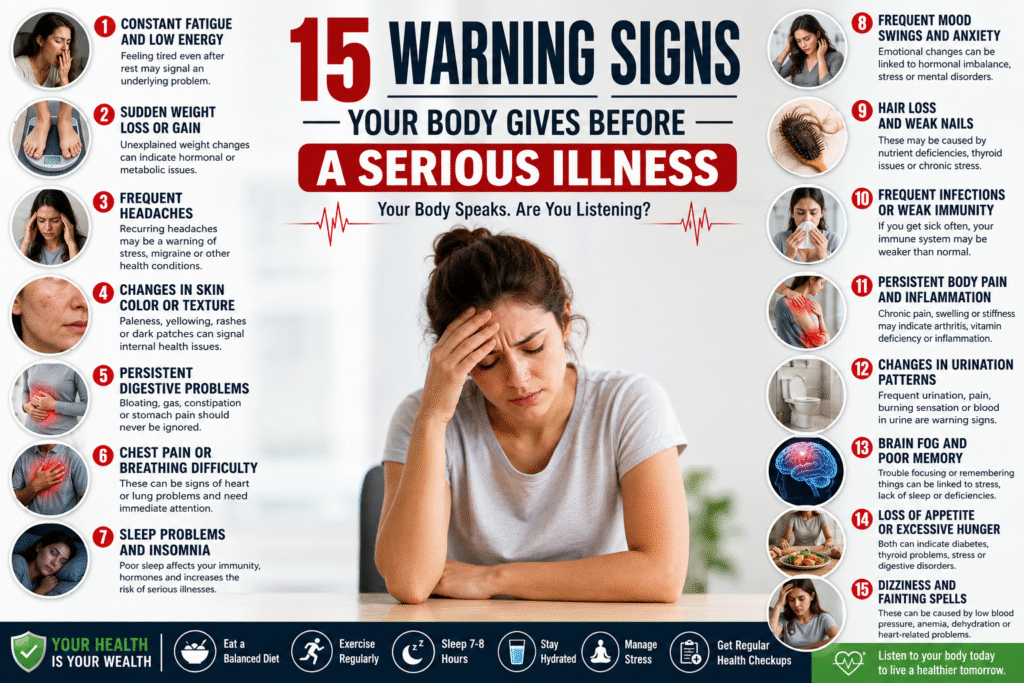
Our body is smarter than we think. Before many serious illnesses develop, the body often sends small warning signals that most people ignore. These signs may appear as tiredness, headaches, skin changes, digestive issues, sleep problems, or sudden weight fluctuations. Because these symptoms seem common or minor, people often overlook them until the condition becomes serious.
Modern lifestyles, unhealthy eating habits, stress, poor sleep, excessive screen time, pollution, and lack of physical activity are increasing health problems worldwide. Diseases like diabetes, heart disease, liver disorders, thyroid problems, anxiety, depression, and even certain cancers often begin silently.
The good news is that our body usually tries to alert us early.
Recognizing these warning signs can help you take action before a condition worsens. Early detection and healthy lifestyle changes can prevent many major diseases and improve long-term health.
In this article, you will learn about 15 warning signs your body gives before a serious illness, why they happen, and when you should seek medical attention.
Table of Contents
Why Listening to Your Body Matters?
Ignoring symptoms is one of the biggest health mistakes people make today. Many individuals continue unhealthy routines while their body struggles internally.
Your body constantly communicates through:
- Energy levels
- Appetite
- Sleep quality
- Skin condition
- Digestion
- Mood changes
- Pain and discomfort
These signals are often the first indicators that something is wrong.
Paying attention to them can help prevent:
- Diabetes
- Heart disease
- Hormonal imbalance
- Mental health disorders
- Nutritional deficiencies
- Liver disease
- Digestive disorders
- High blood pressure
Early awareness can literally save lives.
1. Constant Fatigue and Low Energy
Feeling tired after a long day is normal. But if you constantly feel exhausted even after proper rest, it could be a warning sign of an underlying health problem.
Possible Causes
- Iron deficiency
- Diabetes
- Thyroid disorders
- Sleep apnea
- Depression or anxiety
- Chronic infections
- Heart disease
When the body lacks proper oxygen, nutrients, or hormonal balance, energy production decreases.
Warning Signs to Watch
- Waking up tired daily
- Lack of motivation
- Feeling weak without physical activity
- Brain fog and poor concentration
Persistent fatigue should never be ignored.
2. Sudden Unexplained Weight Loss or Gain
Unexpected changes in body weight can indicate internal health issues.
Rapid Weight Loss May Be Linked To
- Diabetes
- Hyperthyroidism
- Cancer
- Digestive disorders
- Chronic stress
Sudden Weight Gain May Be Caused By
- Hormonal imbalance
- Thyroid problems
- Poor metabolism
- Water retention
- Depression
If your body weight changes significantly without changes in diet or exercise, it is important to investigate the reason.
3. Frequent Headaches
Occasional headaches are common, but recurring headaches may signal deeper health concerns.
Possible Health Conditions
- High blood pressure
- Eye strain
- Migraine disorders
- Stress and anxiety
- Brain-related conditions
- Poor sleep
- Dehydration
Red Flags
- Severe headaches suddenly appearing
- Headaches with blurred vision
- Vomiting or dizziness
- Pain that worsens over time
Chronic headaches should be medically evaluated.
4. Changes in Skin Color or Texture
Your skin often reflects your internal health.
Warning Skin Changes
- Yellow skin or eyes → liver problems
- Pale skin → anemia
- Dark patches → hormonal imbalance or diabetes
- Persistent itching → liver or kidney issues
- Rashes or unexplained spots → autoimmune conditions
Dry, dull, or inflamed skin may also indicate nutritional deficiencies or dehydration.
Never ignore sudden or unusual skin changes.
5. Persistent Digestive Problems
Digestive health plays a major role in overall wellness.
Symptoms That May Signal Illness
- Frequent bloating
- Constipation
- Diarrhea
- Acid reflux
- Stomach pain
- Blood in stool
Possible Causes
- Irritable bowel syndrome (IBS)
- Food intolerance
- Gut infections
- Ulcers
- Liver disease
- Colon disorders
Poor gut health can also affect immunity and mental health.
6. Chest Pain or Breathing Difficulty
Chest discomfort should always be taken seriously.
Potential Causes
- Heart disease
- High blood pressure
- Anxiety attacks
- Lung infections
- Asthma
Emergency Symptoms
- Tightness in chest
- Pain spreading to arm or jaw
- Difficulty breathing
- Sudden sweating and dizziness
These may indicate a heart attack or other serious conditions.
Immediate medical help is necessary.
7. Sleep Problems and Insomnia
Poor sleep is more than just tiredness. Sleep issues can affect hormones, immunity, mental health, and metabolism.
Signs of Poor Sleep Health
- Difficulty falling asleep
- Waking up repeatedly at night
- Excessive daytime sleepiness
- Snoring heavily
- Feeling tired after sleeping
Health Conditions Linked to Sleep Problems
- Anxiety and depression
- Hormonal imbalance
- Sleep apnea
- High stress
- Neurological disorders
Long-term sleep deprivation increases the risk of serious illnesses.
8. Frequent Mood Swings and Anxiety
Mental health symptoms are also body warning signs.
Emotional Changes That Should Not Be Ignored
- Constant irritability
- Anxiety without reason
- Depression symptoms
- Loss of interest in activities
- Emotional instability
Mental health problems can be linked to:
- Hormonal disorders
- Nutritional deficiencies
- Chronic stress
- Sleep problems
- Neurological conditions
Your emotional health is closely connected to physical health.
9. Hair Loss and Weak Nails
Sudden hair fall or brittle nails may indicate internal imbalances.
Possible Causes
- Nutrient deficiencies
- Thyroid disorders
- Hormonal imbalance
- Chronic stress
- Poor diet
The body often prioritizes vital organs over hair and nails when nutrients are lacking.
This makes them important indicators of overall health.
10. Frequent Infections or Weak Immunity
If you fall sick repeatedly, your immune system may be weakened.
Common Warning Signs
- Frequent colds and coughs
- Slow wound healing
- Repeated infections
- Constant weakness
Possible Reasons
- Poor nutrition
- Chronic stress
- Diabetes
- Autoimmune disorders
- Lack of sleep
A weak immune system makes the body vulnerable to many diseases.
11. Persistent Body Pain and Inflammation
Chronic pain is not always related to aging or physical work.
Pain Areas That May Signal Illness
- Joint pain
- Muscle aches
- Back pain
- Swelling and stiffness
Potential Causes
- Arthritis
- Vitamin deficiencies
- Autoimmune disorders
- Chronic inflammation
Inflammation is often linked to long-term health risks including heart disease.
12. Changes in Urination Patterns
Your urinary habits can reveal kidney, bladder, or metabolic problems.
Warning Symptoms
- Frequent urination
- Burning sensation
- Dark urine
- Blood in urine
- Difficulty urinating
Possible Conditions
- Urinary tract infections
- Kidney disease
- Diabetes
- Prostate issues
Hydration levels also affect urinary health.
13. Brain Fog and Poor Memory
If you frequently forget things or struggle to focus, your body may be under stress internally.
Possible Reasons
- Sleep deprivation
- Stress and anxiety
- Nutritional deficiencies
- Thyroid imbalance
- Excessive screen time
Brain fog may affect productivity, learning ability, and daily functioning. Mental clarity is strongly linked to physical health.
14. Loss of Appetite or Excessive Hunger
Major appetite changes may indicate health problems.
Loss of Appetite Could Be Linked To
- Liver disease
- Depression
- Infections
- Digestive disorders
Excessive Hunger May Be Caused By
- Diabetes
- Hormonal imbalance
- Stress eating
- Blood sugar fluctuations
Pay attention to long-term eating pattern changes.
15. Dizziness and Fainting Spells
Occasional dizziness may happen due to dehydration or low blood sugar. However, repeated dizziness should not be ignored.
Possible Causes
- Low blood pressure
- Heart conditions
- Anemia
- Neurological disorders
- Inner ear problems
Serious Symptoms
- Fainting
- Chest pain with dizziness
- Loss of balance
- Blurred vision
Medical evaluation is important if symptoms persist.
Daily Habits That Help Prevent Serious Illness
Prevention is always better than treatment.
Here are simple habits that can help protect your body and mind:
1. Eat a Balanced Diet
Include fruits, vegetables, whole grains, healthy fats, and protein.
2. Sleep 7–8 Hours Daily
Good sleep supports immunity, hormones, and brain health.
3. Stay Physically Active
Exercise improves heart health, metabolism, and mental wellness.
4. Drink Enough Water
Proper hydration supports digestion, skin, and organ function.
5. Reduce Stress
Practice meditation, yoga, deep breathing, or outdoor activities.
6. Avoid Smoking and Excess Alcohol
These increase the risk of major diseases.
7. Get Regular Health Checkups
Early diagnosis improves treatment success.
8. Limit Screen Time
Too much digital exposure affects sleep, brain function, and mental health.
When Should You See a Doctor?
Seek medical advice if symptoms:
- Last for several weeks
- Become severe
- Affect daily life
- Appear suddenly
- Continue despite healthy habits
Ignoring warning signs may delay diagnosis and treatment.
The Importance of Preventive Healthcare
Most serious diseases develop slowly over time. Preventive healthcare focuses on identifying risk factors early before conditions become dangerous.
Regular health monitoring can help detect:
- Blood pressure problems
- Diabetes
- Cholesterol imbalance
- Vitamin deficiencies
- Thyroid disorders
Small lifestyle improvements can create long-term health benefits.
Final Thoughts
Our body constantly sends signals when something is wrong. Unfortunately, modern lifestyles often make people ignore these early symptoms until serious illness develops.
Constant fatigue, headaches, digestive problems, mood changes, sleep disorders, unexplained pain, and skin changes are not always “normal.” They may be your body’s way of asking for attention.
The key to long-term health is awareness, prevention, and balance.
By listening to your body, maintaining healthy habits, reducing stress, exercising regularly, and seeking medical advice when necessary, you can protect your physical and mental well-being.
Your health is your greatest asset — never ignore the warning signs your body gives you.
FAQs for Warning Signs Your Body Gives Before a Serious Illness
1. What are the most common warning signs of serious illness?
Persistent fatigue, unexplained weight changes, chest pain, digestive problems, sleep issues, and frequent infections are common warning signs.
2. Can stress cause physical health symptoms?
Yes, chronic stress can lead to headaches, sleep problems, digestive issues, anxiety, high blood pressure, and weakened immunity.
3. Why is early detection important?
Early detection improves treatment success and helps prevent complications from serious diseases.
4. Are body warning signs always serious?
Not always, but persistent or unusual symptoms should never be ignored.
5. How can I keep my body healthy naturally?
Maintain a balanced diet, exercise regularly, sleep well, stay hydrated, reduce stress, and get regular medical checkups.
Related Articles:-
10 Shocking Ways Screen Time Impacts Children’s Health, Brain and Eyes
7 Ayurvedic Morning Drinks for Better Digestion and Energy
7 Powerful Ways to Reset Your Mind After a Stressful Week