
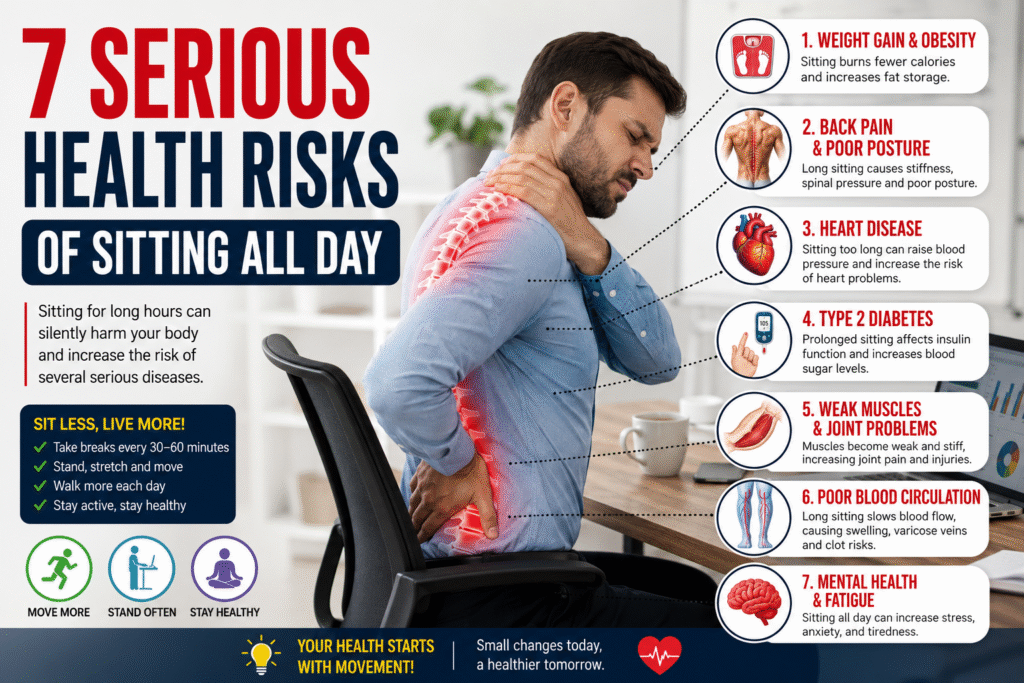
Modern lifestyles have made sitting a major part of daily life. Whether you work in an office, study for long hours, drive regularly, or spend time watching TV and scrolling on your phone, chances are you sit far more than your body was designed for.
While sitting may seem harmless, research shows that prolonged sitting can seriously affect your physical and mental health. In fact, many experts now refer to excessive sitting as the “new smoking” because of its connection to several chronic diseases.
The human body is built for movement. When you sit for extended periods without physical activity, your muscles become inactive, blood circulation slows down, metabolism decreases, and multiple body systems begin functioning less efficiently. In this article, we’ll explore 7 serious health risks of sitting all day, how prolonged sitting affects the body, and practical ways to reduce these risks naturally.
Table of Contents
Why Sitting Too Much Is Dangerous?
Sitting for long hours reduces calorie burning and slows down important bodily functions. Over time, this can increase the risk of several health problems, including obesity, heart disease, diabetes, and posture-related pain.
People at higher risk include:
- Office workers
- Students
- Drivers
- Gamers
- Work-from-home professionals
- People with low physical activity
Even regular gym workouts may not fully offset the harmful effects of sitting continuously for many hours.
1. Increased Risk of Obesity and Weight Gain
One of the most common health problems caused by sitting all day is weight gain.
When you sit for long periods:
- Your body burns fewer calories
- Metabolism slows down
- Fat accumulation increases
- Muscle activity decreases
Combined with unhealthy eating habits and lack of exercise, prolonged sitting can easily lead to obesity.
Why It Happens
The body requires movement to maintain a healthy metabolic rate. Sitting for hours reduces energy expenditure, making it easier to gain weight.
How to Reduce the Risk
- Take short walking breaks
- Use stairs instead of elevators
- Stretch every hour
- Stay physically active daily
2. Back Pain and Poor Posture
Long hours of sitting can seriously damage posture and spinal health.
Many people who sit all day experience:
- Lower back pain
- Neck stiffness
- Rounded shoulders
- Spinal discomfort
- Muscle tightness
Poor sitting posture places extra pressure on the spine and weakens core muscles over time.
Why Sitting Causes Back Problems
Sitting continuously tightens hip muscles and weakens back-supporting muscles. Slouching further increases strain on the spine.
Tips for Better Posture
- Sit with a straight back
- Keep feet flat on the floor
- Adjust screen height properly
- Use ergonomic chairs if possible
Stretch regularly
3. Higher Risk of Heart Disease
Research has linked sedentary lifestyles to cardiovascular disease.
Sitting all day may contribute to:
- High blood pressure
- Poor blood circulation
- Increased cholesterol levels
- Higher risk of heart attack
Inactive muscles burn less fat, allowing fatty acids to build up in blood vessels.
Warning Signs
Seek medical attention if you experience:
- Chest pain
- Shortness of breath
- Frequent dizziness
- Rapid heartbeat
Ways to Protect Heart Health
- Walk daily
- Exercise regularly
- Avoid long sitting sessions
- Maintain a healthy diet
- Reduce stress levels
4. Increased Risk of Type 2 Diabetes
Sitting for prolonged periods can affect how the body regulates blood sugar.
Studies suggest that inactive lifestyles may increase insulin resistance, which raises the risk of Type 2 Diabetes.
How It Happens
Muscle movement helps the body use glucose efficiently. Sitting too much reduces insulin sensitivity and slows sugar metabolism.
Prevention Tips
- Stay active throughout the day
- Reduce sugary foods
- Walk after meals
- Maintain a healthy weight
Exercise consistently
5. Weak Muscles and Joint Problems
The body needs regular movement to maintain muscle strength and joint flexibility.
Excessive sitting weakens:
- Leg muscles
- Glute muscles
- Core muscles
- Hip flexibility
Weak muscles increase the risk of:
- Joint pain
- Knee stiffness
- Balance issues
- Reduced mobility
Why Movement Matters
Inactive muscles gradually lose strength and endurance. This can affect physical performance and increase injury risk.
How to Stay Strong
- Stretch daily
- Perform light exercises
- Practice yoga
- Walk frequently
Strength train regularly
6. Poor Blood Circulation and Leg Problems
Sitting too long slows blood circulation, especially in the legs.
This may lead to:
- Swollen feet
- Numbness
- Tingling sensations
- Varicose veins
- Blood clot risks
In severe cases, prolonged sitting may contribute to deep vein thrombosis (DVT), a serious condition involving blood clots.
Why Circulation Slows
When sitting for hours, leg muscles remain inactive and blood flow becomes less efficient.
Improve Blood Flow Naturally
- Stand up every 30–60 minutes
- Stretch your legs
- Stay hydrated
- Walk regularly
Avoid crossing legs for long periods
7. Mental Health Problems and Fatigue
Sitting all day doesn’t only affect physical health — it can also impact mental well-being.
Sedentary lifestyles are associated with:
- Increased stress
- Anxiety
- Low mood
- Fatigue
- Reduced energy levels
Lack of movement reduces the release of feel-good chemicals like endorphins and serotonin.
Why Sitting Affects Mood
Physical activity improves blood flow to the brain and supports mental health. Long inactivity can increase mental exhaustion.
Boost Mental Wellness
- Exercise regularly
- Spend time outdoors
- Take screen breaks
- Practice mindfulness
Maintain social interaction
Signs You’re Sitting Too Much
You may need more movement in your routine if you frequently experience:
- Stiffness after sitting
- Back or neck pain
- Low energy
- Weight gain
- Poor posture
- Leg numbness
- Fatigue
- Reduced flexibility
Ignoring these symptoms can worsen long-term health risks.
How Much Sitting Is Too Much?
Experts suggest that sitting continuously for long periods without movement is harmful. Sitting for more than 6–8 hours daily with little physical activity may significantly increase health risks. The key is not only exercising but also reducing uninterrupted sitting time.
Simple Ways to Reduce Sitting Time
1. Take Movement Breaks
Stand up and move every 30–60 minutes.
2. Walk More Daily
Short walks improve circulation and metabolism.
3. Use a Standing Desk
Alternating between sitting and standing can help.
4. Stretch Frequently
Simple stretches reduce muscle stiffness.
5. Exercise Regularly
Aim for at least 30 minutes of daily activity.
6. Avoid Long Screen Sessions
Take breaks from TV, phones, and computers.
7. Stay Active at Home
Do household activities instead of sitting continuously.
Best Exercises for People Who Sit All Day
Helpful activities include:
- Walking
- Yoga
- Stretching
- Cycling
- Swimming
- Strength training
Even light movement can significantly reduce the harmful effects of prolonged sitting.
Final Thoughts on Serious Health Risks of Sitting All Day
Sitting all day may seem normal in modern life, but too much inactivity can seriously harm your health over time. From obesity and back pain to heart disease and poor circulation, the effects of prolonged sitting can impact nearly every part of the body.
The good news is that small lifestyle changes can make a major difference. Standing more often, stretching regularly, walking daily, and exercising consistently can help protect your body from the dangers of a sedentary lifestyle.
Your body is designed to move — and movement is one of the most powerful tools for long-term health and wellness.
FAQs about Serious Health Risks of Sitting All Day
Is sitting all day really harmful?
Yes. Prolonged sitting is linked to obesity, heart disease, diabetes, poor posture, and circulation problems.
How many hours of sitting is unhealthy?
Sitting continuously for more than 6–8 hours daily with little movement may increase health risks.
Can exercise cancel out the effects of sitting?
Regular exercise helps, but long uninterrupted sitting periods can still negatively affect health.
What are the symptoms of sitting too much?
Common symptoms include back pain, stiffness, fatigue, poor posture, numb legs, and weight gain.
How can I reduce the health risks of sitting?
Take regular movement breaks, walk daily, stretch often, exercise consistently, and avoid sitting continuously for long hours.
Related Articles:-
7 Dangerous Physical Health Problems Caused by Overthinking
15 High-Protein Indian Breakfast Ideas for Energy, Muscle Gain & Weight Loss
15 Powerful Wellness Habits for Gen Z Adults that how to Boost Mental and Physical Health
How to Stop Doomscrolling at Night: 10 Proven Tips for Better Sleep
7 Surprising Reasons Why Your Skin Gets Oily and Acne-Prone in Summer (And How to Fix It)
[…] 7 Serious Health Risks of Sitting All Day […]
[…] 7 Serious Health Risks of Sitting All Day […]
[…] 7 Serious Health Risks of Sitting All Day […]