
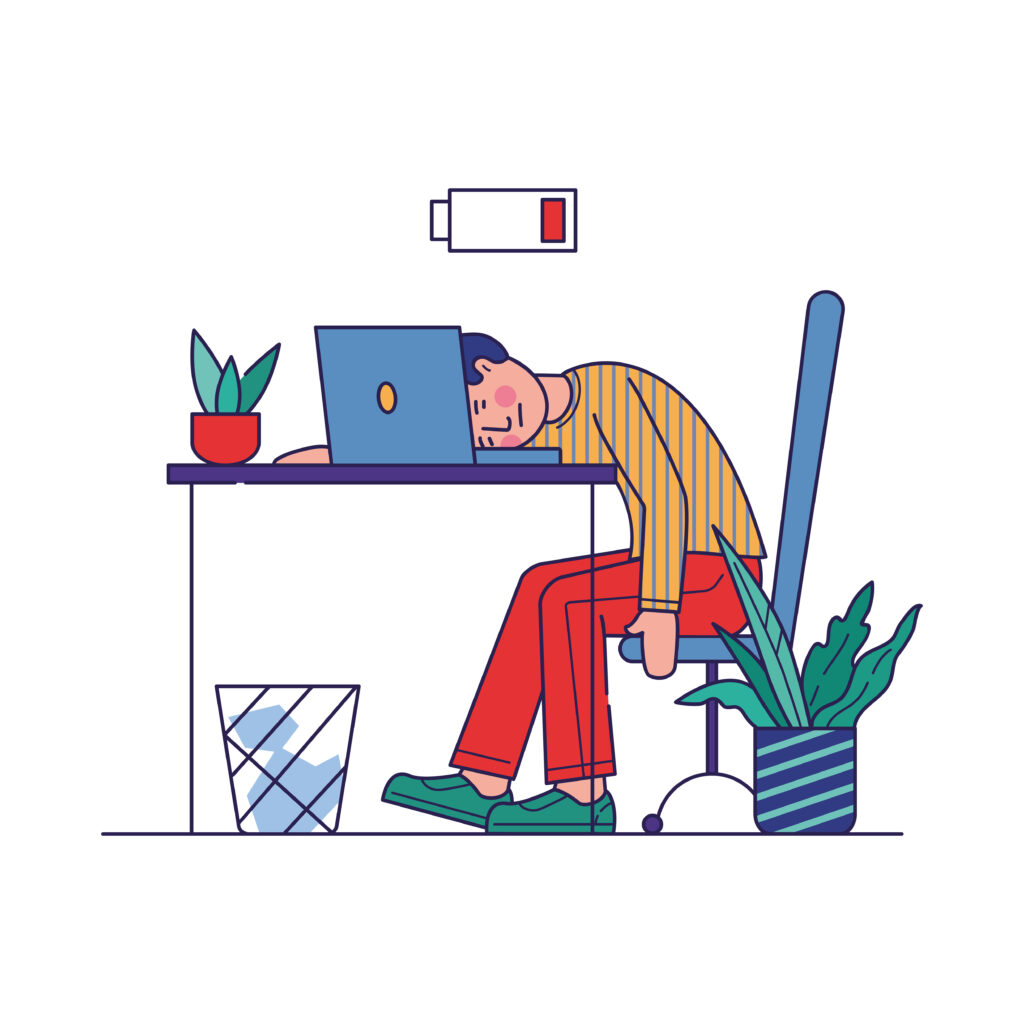
Are you feeling Tired all the time in a day? You went to bed at 10 PM. You woke up at 6 AM. You should feel like a superhero, but instead, you’re on your third cup of coffee by noon. If the ‘8-hour rule’ is the gold standard, why do you still feel like you’ve been hit by a truck?
We have been told the same lie for decades: “Just get eight hours of sleep, and you’ll be fine.”
You followed the rules. You went to bed at 10:00 PM. You dragged yourself out of bed at 6:00 AM. Theoretically, you should be bursting with energy, ready to conquer your To-Do list. Instead, you feel like your brain is wrapped in cotton wool, your limbs weigh a thousand pounds, and you’re already eyeing the coffee machine before your first Zoom call.
If the quantity of your sleep is sufficient, but the quality is lacking, you aren’t actually resting—you’re just unconscious.
In this guide, we will look past the “eight-hour myth” and uncover the physiological, environmental, and lifestyle “energy thieves” that are robbing you of your vitality.
Table of Contents
1. The “Social Jetlag” Phenomenon
Most people have a “work-week sleep schedule” and a “weekend sleep schedule.” If you wake up at 6:00 AM Monday through Friday but sleep in until 10:00 AM on Saturday, you are giving yourself a self-inflicted case of jetlag.
Your body operates on a Circadian Rhythm—an internal biological clock that regulates everything from body temperature to hormone release. When you shift your wake-up time by more than an hour, you confuse your internal clock. Even if you get 8 hours on Sunday night, your body is still looking for its “missing” rhythm, leading to profound daytime grogginess.
How to Fix it: Maintain a consistent wake-up time 7 days a week. Your body craves a predictable anchor point.
2. Sleep Inertia: The “Waking Up” Tax
Have you ever felt more tired after a long sleep than a short one? This is often Sleep Inertia.
When you wake up during a Deep Sleep (Slow Wave Sleep) phase rather than a Light Sleep phase, your brain struggles to “boot up.” It can take anywhere from 30 minutes to 4 hours for the brain to fully transition into an awake state. If you are hitting the snooze button repeatedly, you are forcing your brain back into a new sleep cycle that it cannot finish, doubling the heaviness you feel.
3. The Silent Thief: Sleep Apnea and Fragmented Sleep
You might think you slept for 8 hours, but your brain might have “woken up” 50 times without you knowing it.
Obstructive Sleep Apnea (OSA)
Obstructive Sleep Apnea (OSA) is a condition where your breathing repeatedly stops and starts during sleep. Even if you don’t fully wake up, your brain has to “ping” itself out of deep sleep to restart your breathing.
- The Sign: Do you snore loudly? Do you wake up with a dry mouth or a headache?
- The Impact: You spend the whole night in “Light Sleep,” never reaching the restorative REM or Deep Sleep stages.
4. The “Blue Light” and Melatonin Suppression
Your eyes are an extension of your brain. When they detect blue light (the kind emitted by your smartphone, laptop, and LED bulbs), they send a signal to the pineal gland to stop producing Melatonin.
Melatonin is the “vampire hormone”—it only comes out in the dark. If you are scrolling through social media at 11:00 PM, your brain thinks it’s high noon. You might fall asleep eventually due to sheer exhaustion, but the chemical structure of that sleep is shallow and non-restorative.
5. Nutritional Deficiencies: The Energy Foundation
Sometimes the problem isn’t your bed; it’s your blood. Three specific deficiencies are notorious for causing “unexplained” fatigue:
- Iron: Essential for carrying oxygen to your cells. Low iron (anemia) makes every task feel like a marathon.
- Vitamin D: Often called the “sunshine vitamin,” it plays a massive role in mood and energy regulation.
- Magnesium: This mineral helps your muscles relax and regulates the nervous system. Without it, your body stays in a “high alert” state even while asleep.
6. The “Hidden Alcohol” Trap reason of Tired All the Time
Many people use a “nightcap” (a glass of wine or whiskey) to help them fall asleep. While alcohol is a sedative that helps you drift off faster, it is a REM-sleep killer.
As the alcohol is metabolized by your liver, your body undergoes a “rebound effect,” causing you to toss and turn and spend the second half of the night in very light, fragmented sleep. You wake up hydrated and chemically “hungover,” even if you only had one drink.
7. Psychological Load: The “Open Tabs” Syndrome
Stress doesn’t just keep you awake; it lowers the quality of the sleep you do get. If your brain is “processing” work stress or relationship anxiety all night, your sympathetic nervous system (fight or flight) remains slightly engaged.
This prevents the Glymphatic System—the brain’s waste-clearance system—from doing its job. Think of it as trying to wash a car while the engine is still running; the job never quite gets finished.
How to Fix It: Your 7-Day Sleep Quality Audit
If you want to stop feeling like a zombie, follow this checklist for the next week:
1. The 10-3-2-1-0 Rule to not feel Tired All the Time
- 10 Hours before bed: No more caffeine (it stays in your system longer than you think).
- 3 Hours before bed: No more food or alcohol (let your digestion rest).
- 2 Hours before bed: No more work (close the “tabs” in your brain).
- 1 Hour before bed: No more screens (turn on “Night Shift” mode or use blue-light blockers).
- 0 Times: The number of times you hit the snooze button in the morning.
2. View Sunlight Within 30 Minutes of Waking
Getting natural light in your eyes first thing in the morning sets a “timer” for melatonin production 14 hours later. It’s the single most effective way to regulate your circadian rhythm.
3. Cool Your Environment
Your core body temperature needs to drop by about 1°C to initiate deep sleep. Set your thermostat to approximately 18°C (65°F). A cool room and a warm blanket are the perfect recipe for deep rest.
4. Optimize Your Magnesium Intake
Consider eating magnesium-rich foods like spinach, pumpkin seeds, or dark chocolate in the evening to help your nervous system transition into “Rest and Digest” mode.
When to See a Doctor
If you have optimized your habits and still feel exhausted after two weeks, it is time for professional help. Ask your doctor for:
- A Full Blood Panel: Specifically checking Iron, Ferritin, B12, and Vitamin D.
- Thyroid Function Test: Hypothyroidism is a common cause of chronic fatigue.
- An Overnight Sleep Study: To rule out Sleep Apnea or Restless Leg Syndrome.
Conclusion:-
Sleep quantity is just a number. Sleep quality is a lifestyle. Getting 8 hours of “junk sleep” is the equivalent of eating 2,000 calories of fast food—it fills the requirement, but it doesn’t nourish the system. By aligning your habits with your biology—rather than fighting against it—you can finally wake up feeling like the version of yourself you’ve been missing.
Stop counting the hours. Start making the hours count.
Related Articles:-
Morning Routine That Actually Boosts Your Energy
How Better Sleep Helps to Lose Weight Faster. Does it works?
10 Proven Natural Ways to Reduce Stress, Anxiety, and Depression
[…] Why You’re Tired All the Time (Even After 8 Hours of Sleep) […]
[…] Why You’re Tired All the Time (Even After 8 Hours of Sleep) […]
[…] Why You’re Tired All the Time (Even After 8 Hours of Sleep) […]