

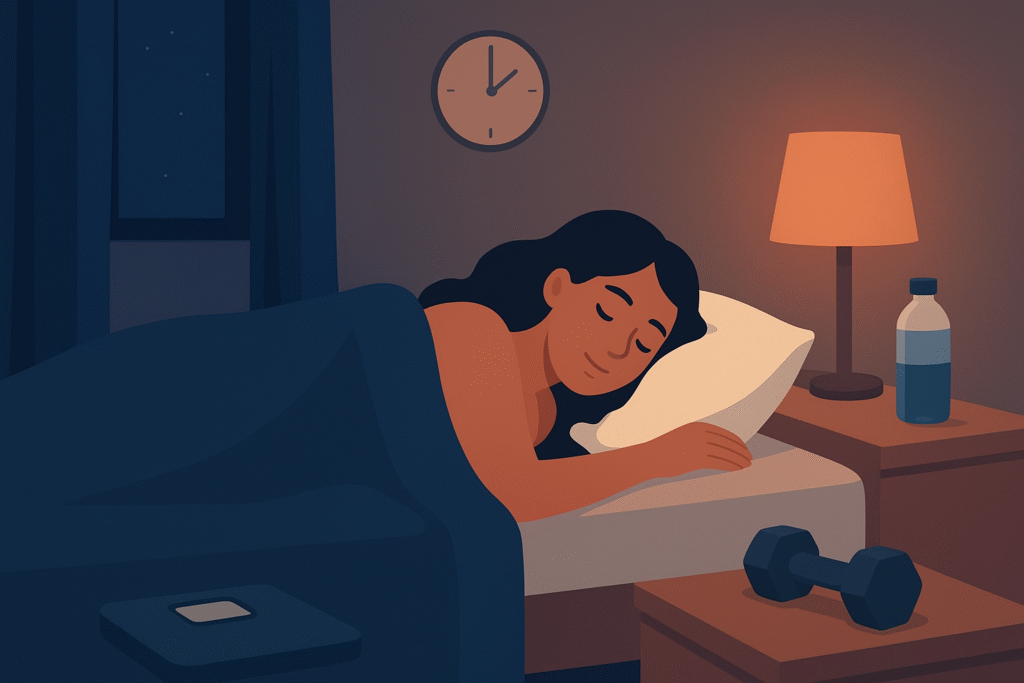
Better Sleep helps to lose weight faster. do you think, it works. When most people think of weight loss, they think of diet and exercise. But here’s a powerful secret many overlook: sleep is a foundation. In fact, getting better sleep can accelerate your weight loss efforts. It’s not magic — it’s biology, backed by science. In this article, we’ll explore how better sleep helps you lose weight faster, what the government and academic research say, and practical tips you can start today.
Table of Contents
The Science Behind Better Sleep helps to Lose Weight
1. Hormones: Leptin, Ghrelin, Insulin — the Sleep Connection
One of the key ways sleep impacts weight is through hormonal regulation. When we skimp on sleep, our bodies get thrown off balance:
- Ghrelin, the hunger hormone, tends to go up with poor or restricted sleep.
- Leptin, the satiety (fullness) hormone, tends to go down with sleep deprivation.
- This imbalance makes you feel hungrier and less satisfied after meals.
- In a controlled study, participants restricted to 4 hours of sleep (versus more sleep) showed significantly higher hunger and increased appetite, linked to increased ghrelin / decreased leptin ratio.
This hormonal disruption frequently leads to snacking, overeating, and cravings — mostly for refined carbs and sugary foods.
2. Appetite, Calorie Intake & Food Choices
Sleep deficiency doesn’t just make you “feel” hungry — it influences what you choose to eat and how much:
- Studies show that short sleepers tend to consume more calories, especially from fats and carbs, and snack more often (particularly at night) compared to people sleeping adequately.
- The NIH reports that in a real-world trial, extending sleep among overweight individuals reduced total calorie intake. National Institutes of Health (NIH)
- Another study found that sleep restriction (losing ~1 hour per night over 5 nights) blunted fat loss for people already in a calorie-deficit weight loss program. PMC
Thus, better sleep helps you naturally eat less (or resist overeating) by balancing appetite hormones and reducing cravings.
3. Metabolism, Fat Burning & Energy Expenditure
Sleep also affects how efficiently your body uses energy:
- Chronic sleep deprivation impairs carbohydrate metabolism, can reduce insulin sensitivity, and is associated with risk of type 2 diabetes.
- Good sleep supports healthier glucose regulation, better insulin response, and helps maintain metabolic flexibility (i.e. your body’s ability to switch between burning carbs vs fats).
- Moreover, sleep influences aspects of non-exercise activity thermogenesis (NEAT) — small movements, fidgeting, spontaneous activity — which over time can contribute meaningfully to calorie burn. When you’re exhausted, you move less.
- In a weight loss intervention, poor sleep efficiency (more awakenings, lower quality) was independently associated with slower weight loss, even when diet & exercise were controlled.
4. Fat Loss & Body Composition
It’s not just about the number on the scale — how much fat vs lean mass you lose is crucial:
- A longitudinal study found that better “sleep health” (quality, duration, regularity) was associated with greater weight and fat loss over time.
- In another weight loss program of 245 women, those reporting better subjective sleep quality had about a 33% greater likelihood of successful weight loss.
- Conversely, in a 6-month weight loss trial, people who were sleeping 6 hours or less (or >8 hours) at baseline had lower success rates than those in the “sweet spot” of 6–8 hours sleep.
So, aiming for not just more sleep but better-quality sleep can favor fat loss and preserve lean tissue.
5. The Public Health Angle: Sleep & Obesity
Government agencies and large cohort studies also support the sleep–weight link:
- The Centers for Disease Control and Prevention (CDC) reviews show that decreased sleep duration and poor sleep quality are strongly linked to obesity risk (in both children and adults).
- The CDC’s chronic disease indicators note that insufficient sleep among adults (<7 hours) is associated with obesity, diabetes, hypertension, and other conditions.
- In cross-sectional and longitudinal epidemiologic analyses, short sleep is associated with higher odds of weight gain and obesity — e.g. adults sleeping 5–6 hours versus 7–8 hours had a ~1.55× higher risk of obesity.
- A 6-year Italian cohort study of ~1,600 adults reported that each additional hour of sleep correlated with a ~30% lower incidence of obesity.
Taken together, the evidence is robust: better sleep is a modifiable factor in weight management.
How Much Sleep Is “Better Sleep”?
Quality matters just as much as quantity. Here are key dimensions:
| Sleep Dimension | Suggested Benchmark / Range* |
| Duration | 7–9 hours for most adults (though individual needs vary) |
| Timing & Consistency | Go to bed and wake up at consistent times daily |
| Continuity | Fewer awakenings, minimal fragmentation |
| Sleep Efficiency | High ratio of time asleep vs time in bed |
| Sleep Architecture | Adequate deep (slow-wave) and REM sleep stages |
* Note: Some people may require slightly more or less sleep depending on age, genetics, health status, and lifestyle. Always tune within your body’s signals.
Also, avoid both under-sleeping (<6 hours habitually) and oversleeping (>9–10 hours consistently), as both extremes have been associated with some health risks.
Strategies to Improve better Sleep & Lose weight
Here are science-based and practical tips you can implement:
1. Set a Consistent Sleep Schedule
Stick to fixed bed and wake times even on weekends. Regularity helps stabilize circadian rhythms, making sleep deeper and more restorative.
2. Create a Bedroom Sanctuary
- Keep your sleeping environment cool, dark, quiet.
- Use blackout curtains, white noise, eye masks.
- Reserve the bed for sleep (and intimacy) only — avoid using it for work or heavy screen time.
3. Wind Down Before Bed
- Establish a 30-60 minute pre-sleep ritual (reading, warm bath, gentle stretching).
- Avoid screens (phones, tablets) in the hour before bed, as blue light suppresses melatonin.
- Limit caffeine (e.g. after early afternoon) and heavy meals late at night.
4. Moderate Evening Light / Bright Light Exposure
- Get bright light (sunlight) in the early morning — it strengthens your circadian cues.
- Dim lights in evening. Use warm lighting rather than harsh overhead light.
5. Exercise Wisely
Physical activity helps support better sleep — but avoid vigorous workouts close to bedtime (within ~1 hour).
(Insert internal link to your article on “best times to exercise” or “fitness routines for beginners”)
6. Mind Stress & Mental Calm
High stress and rumination can disrupt sleep. Techniques like deep breathing, meditation, journaling, or progressive muscle relaxation can help.
7. Avoid Late Meals / Align Eating with Sleep
Eating very late (close to bedtime) may interfere with digestion and sleep quality. Also, aligning calorie intake earlier in the day tends to favor better metabolic outcomes (chrononutrition concept). Wikipedia
8. Limit Alcohol & Stimulants
While alcohol can sedate initially, it disrupts deep sleep and REM. Similarly, nicotine, energy drinks, or stimulants late in the day harm sleep quality.
9. Consider Sleep Tracking & Optimization
Use a sleep tracker or journal to monitor patterns (bedtime, wake time, awakenings). Look for trends. But don’t obsess — tracking should guide, not stress you.
10. Address Sleep Disorders If you snore heavily, gasp during sleep, or wake up unrefreshed, you may have obstructive sleep apnea (OSA) or other disorders. OSA particularly hinders deep sleep and contributes to weight gain. (insert external link to a reputable sleep disorder site or NIH)
Treating OSA (e.g. with CPAP) often helps both sleep and weight control.
How to Build Sleep into Your Weight Loss Plan
To fully harness the power of better sleep in your weight loss journey:
- Prioritize sleep from day one — adjust your bedtime as a non-negotiable habit.
- Pair good sleep with a sensible calorie deficit, protein adequacy, strength training, and movement.
- When you hit a plateau, don’t just cut more calories — audit your sleep, stress, recovery, and consistency.
- Use internal links: link “diet plans,” “fat-burn workouts,” “meal timing,” “stress management,” etc., so you retain readers.
- Use external links to authoritative studies/organizations (e.g. NIH, CDC, NCBI) to substantiate your claims.
Conclusion for better sleep to lose weight
Better sleep is far from a luxury — it’s a powerful tool in your weight loss toolkit. By regulating hunger hormones, reducing cravings, improving metabolism, preserving lean mass, and enhancing recovery, quality rest helps you lose weight faster and more sustainably. Backed by evidence from government agencies and peer-reviewed research, the link between good sleep and fat loss is real and actionable. Prioritize your sleep, optimize your habits, and let your body do the heavy lifting.
[…] How Better Sleep Helps You Lose Weight Faster. Does it works? […]
[…] How Better Sleep Helps You Lose Weight Faster. Does it works? […]
[…] How Better Sleep Helps You Lose Weight Faster. Does it works? […]
[…] How Better Sleep Helps You Lose Weight Faster. Does it works? […]