
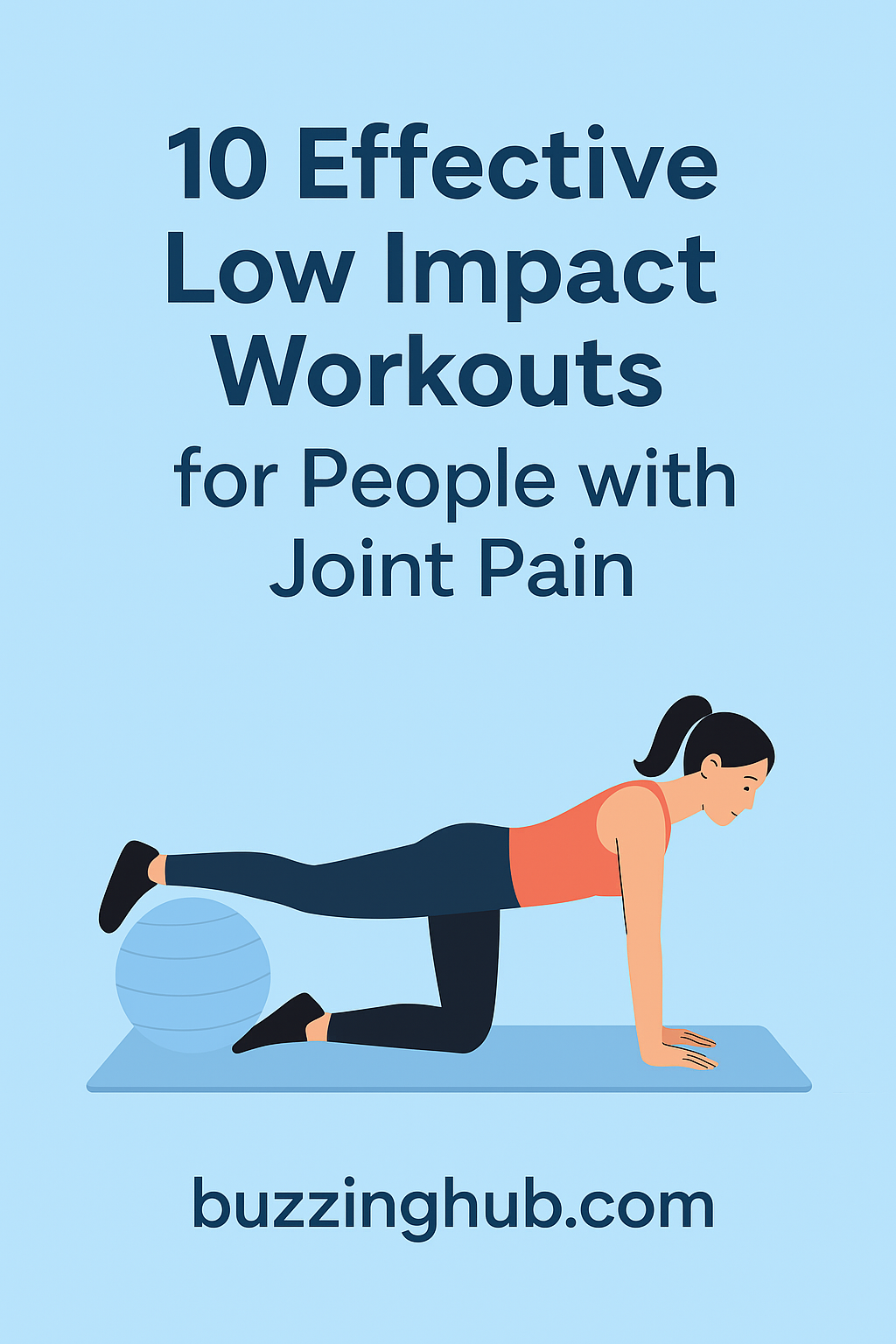
Low impact workouts for people with joint pain– you know how even small movements can feel difficult. But here’s the truth — the right kind of exercise can actually help reduce joint pain, not make it worse.
Gentle, low impact workouts keep your joints flexible, strengthen supporting muscles, and improve blood flow — all while avoiding stress on your knees, hips, and shoulders.
This article will walk you through 10 proven low impact workouts for people with joint pain, backed by science and trusted by physical therapists and their studies in it. These exercises are simple, safe, and ideal for people of all ages.
Table of Contents
1. Walking — Simple Yet Powerful
Walking may seem basic, but it’s one of the best ways to improve joint mobility without overexerting your body. walking can be beneficial for joint pain (especially in conditions like osteoarthritis), but the effect depends on how much, how intensely, and your underlying joint health. It’s not a one-size-fits-all answer. Below is a balanced view — pros, caveats, and what the evidence says — along with a reference you can check.
Potential Benefits of Walking for Joint Pain
- Improves joint function and reduces stiffness
Regular moderate walking can help maintain joint mobility and reduce stiffness. Exercise is considered one of the most effective non-drug treatments for osteoarthritis and related joint conditions. - Strengthens muscles around the joint
Stronger muscles (e.g. quadriceps around the knee) help stabilize the joint and reduce the stress placed directly on cartilage and bone. - Reduces pain and functional decline
Some observational and interventional studies indicate that more walking (or purposeful walking) is associated with lower risk of developing pain or functional limitations in people with or at risk of knee osteoarthritis.
For example, in one cohort study, each additional 1,000 steps per day was linked to 16–18% lower risk of developing functional limitation over two years. - Slows structural progression (possibly)
Some evidence suggests walking might slow joint deterioration (e.g. narrowing of joint space) in knees with osteoarthritis, though this is less consistent.
Caveats & Potential Risks
Walking is not always benign for joint pain — risks arise especially if applied improperly:
- Excessive duration or intensity may worsen symptoms
In patients with knee osteoarthritis, continuous walking beyond ~30 minutes has been shown to increase joint loading and may aggravate pain. Interval walking (splitting the walking into shorter bouts) may mitigate some of this risk. - Severe joint damage or instability
If the joint is already severely damaged, misaligned, or unstable, walking might contribute to further wear or pain. In such cases, a more tailored regimen (under physiotherapy supervision) is safer. - One approach may not suit all joints
What works for the knee may be different for the hip, ankle, or spine. The underlying cause of joint pain (arthritis, injury, inflammation, etc.) matters. - Too much, too soon
Starting with overly long or brisk walking can worsen pain or cause strain. Gradual increase is important.
Practical Tips for Walking with Joint Pain
- Begin with short, frequent walks rather than a long continuous walk.
- Use proper footwear with cushioning and support.
- Warm up and cool down, with gentle stretching.
- If pain increases during walking, stop or slow down.
- Mix walking with strength training and flexibility exercises.
- Consider walking support (stick, cane) if needed.
- Consult a physiotherapist for an individualized plan based on your joint condition.
Reference:-
https://www.health.harvard.edu/pain/walking-for-exercise-may-prevent-knee-pain?utm_source
2. Swimming — The Ultimate Joint-Friendly Exercise
Water supports up to 90% of your body weight, making swimming perfect for people with arthritis or joint pain. swimming (or other aquatic exercise) is generally considered beneficial for people with joint pain, especially when the pain is due to arthritis or degenerative joint disease. But as always, it depends on your specific condition (which joint, how badly affected, etc.). Below is a balanced view:
Benefits of Swimming / Aquatic Exercise for Joint Pain
- Low-impact exercise / joint relief
Because water provides buoyancy, your bodyweight is partially supported by the water, reducing the load and impact on your joints. This lets you move more freely with less pain. - Pain reduction & improved function
Systematic reviews of aquatic (water-based) exercise in patients with osteoarthritis show that aquatic exercise reduces pain and improves joint function and quality of life versus no treatment, and in some cases even better than land-based exercise.
In one trial, regular swimming reduced joint pain and stiffness and improved functional capacity in people with osteoarthritis. - Muscle strengthening and flexibility
Swimming provides resistance (water resistance), which helps build strength in muscles around the joint. Strong muscles help to stabilize and protect joints Also, being in water can allow you to stretch and move joints in ways harder on land, aiding flexibility and range of motion. - Improved circulation, stiffness relief, and muscle relaxation
Warm water (in many therapy pools) can help relax muscles, reduce stiffness, and improve circulation, which in turn can ease pain. Also, aquatic exercise can improve mood and encourage regular activity (benefits beyond joints). - Possibly protective effects for joints
Some studies suggest that swimming may help preserve joint health (for example, for knees) through reduced compression stress and enhanced proprioception, though more long-term research is needed.
Caveats & Things to Watch Out For
- Technique matters: Poor swimming form (e.g. forcing a stroke when joints are inflamed) could irritate joints (especially shoulders or knees).
- Temperature & pool conditions: Very cold water may stiffen joints; too cold or harsh chemicals might aggravate inflammation. Warm water (therapy pools) are often preferred.
- Overdoing it: As with any exercise, overexerting yourself could flare pain. It’s best to start slowly and build up.
- Not a standalone cure: Swimming is a useful component of a management plan, but may need to be combined with strength training, medications, physical therapy, etc.
- Accessibility & skill: You need access to a pool and ideally guidance or supervision, especially if you’re new to swimming or have movement limitations.
Referance:-
3. Stationary Cycling
Cycling on a stationary bike is an excellent low impact cardio workout that strengthens your lower body while protecting your joints. Cycling on a stationary bike is an excellent low impact cardio workout that strengthens your lower body while protecting your joints. Stationary cycling is generally beneficial for joint pain, especially in conditions like knee osteoarthritis. But like any exercise, its effectiveness depends on how it’s done — the intensity, duration, the joint involved, your baseline condition, and equipment setup. I’ll lay out what research says, what to watch out for, and then give you a reference you can check.
Benefits of Stationary Cycling
- Reduces pain and improves function
A meta-analysis of randomized trials found that stationary cycling led to reduced pain and improved sport-related function in people with knee osteoarthritis compared to no exercise. Another randomized controlled trial with mild-to-moderate knee OA showed that group stationary cycling improved walking pain, stiffness, and daily function compared to controls. - Low-impact movement
Cycling does not put the same weight-bearing load on the joints (like knees or hips) as walking or running. Because you are seated and the motion is more controlled, there’s less “impact” per step. That means joints are less likely to be aggravated. - Joint lubrication & range of motion
The circular motion of pedaling helps move joints through a safe range of motion, which stimulates production of synovial fluid — this fluid helps lubricate joints, reduce stiffness, and may improve mobility. - Builds supporting muscles
Strong muscles around the joint (quadriceps, hamstrings, calves) help offload stress from the joint surfaces. Stationary cycling strengthens these muscles without overly stressing the joint. - Improved fitness, weight management
Regular cycling helps cardiovascular fitness and can help control weight. Less weight means less load on painful joints (especially knees, hips). Even small weight reductions can make significant difference in joint load.
Be Careful While Stationary Cycling
- Seat height and bike setup matter a lot. If the seat is too low or too high, it can cause undue stress on knee, hip or even back joints.
- Resistance & duration shouldn’t be too high at first. Overdoing either can lead to soreness or exacerbate joint pain. It’s better to start light and gradually increase.
- Not all improvements are “clinically significant” in all measures. For example, in some studies improvements in stiffness or daily activities with cycling were below the threshold considered “clinically meaningful.”
- Joint condition matters. If there’s severe damage, inflammation, or instability, then even low-impact cycling may need supervision/adjustment. Pain during or after must be monitored.
- Variety helps. Doing only cycling may not address other needs (e.g. strength in other areas, balance, flexibility). A mixed approach often works better.
Practical Tips for Doing It Safely & Effectively
- Use a stationary bike with adjustable seat. Seat height such that when pedal is at the lowest point, your knee has a slight bend (not fully straight).
- Start with short sessions (e.g. 5-10 minutes), gradually increase time as tolerated.
- Keep resistance low to moderate; avoid high resistance until muscles are stronger.
- Warm up and cool down; stretch after exercise.
- Monitor pain: A mild increase during or after might be acceptable; sharp pain or worsening beyond a day is a sign to back off.
- Prefer recumbent bike if balance or lower back pain is an issue.
4. Yoga — Gentle Movement with Deep Benefits
Yoga improves joint flexibility, balance, and posture, while calming your mind. Choose beginner or “gentle yoga” classes focusing on stretching and slow transitions. yoga can be beneficial for joint pain, especially in conditions like osteoarthritis or rheumatoid arthritis. There’s a fair amount of evidence showing it helps to reduce pain, improve mobility, and enhance quality of life. But like any intervention, how helpful it is depends on the specific joint, severity of damage, type of yoga, how often it is done, and whether modifications are made. Below is a breakdown, plus a reliable external source.
Evidence & Benefits of Yoga for Joint Pain
- Reduces pain and stiffness in joints
- Systematic review/meta-analysis of studies in people with knee osteoarthritis showed that yoga protocols (40-90 minutes per session, over at least 8 weeks) produced improvements in pain relief and mobility.
- In a randomized controlled trial comparing yoga plus exercises vs therapeutic exercises alone, yoga had better improvements for walking pain, range of motion, joint swelling/tenderness, etc. in knee OA.
- Improves physical function and range of motion
Yoga includes stretching, flexibility, balance, strength in supporting muscles. These help joints move more freely and reduce disability. Studies show improvements in range of flexion, walking time, etc. - Helps with stiffness, morning rigidity, and mood/stress
Yoga often combines physical postures (asanas), breathing (pranayama), relaxation. These help reduce stiffness (often worse in mornings), improve mood, reduce anxiety, which can otherwise worsen the perception of pain. In one study of knee osteoarthritis, yoga significantly reduced morning stiffness and pain at rest more than control (physiotherapy) groups. - May be comparable to other exercise types
A recent trial comparing yoga vs strengthening exercises for knee OA found that yoga was noninferior to strengthening exercises for reducing pain over 12 weeks. So yoga could be an alternative or complement to standard exercise therapies.
Limitations & Cautions
- The quality of evidence is often moderate to low; many studies have small sample size, short duration, variability in yoga styles, and issues with blinding.
- Some people may not get strong pain reduction or sometimes pain relief is small or not clinically meaningful.
- Risk of injury if poses are done incorrectly, or if joints are very unstable or severely damaged. Modification / supervision is important.
- Yoga might help more with mild-to-moderate joint pain; in very severe joint degeneration, medication / physical therapy / surgical options may also be necessary.
Practical Tips to Get Maximum Benefit Safely
- Choose a gentle style of yoga (e.g., Hatha, Iyengar, or a class specialized for arthritis) rather than very intense styles.
- Use props, modify poses. Don’t force full range; work within pain-free or acceptable discomfort limits.
- Practice regularly (e.g. 1-3 times/week) rather than sporadically. Even sessions of ~30-60 minutes seem effective.
- Warm up well before practice; include breathing, relaxation.
- Combine yoga with other beneficial activities (strength training, low-impact cardio) for comprehensive joint health.
- Consult a physiotherapist or a trained yoga instructor, especially if you have joint damage, recent injury or flare-ups.
Reference:-
5. Tai Chi — Ancient Movement for Modern Pain Relief
Tai Chi is a slow, meditative martial art that enhances joint mobility and improves balance. Tai Chi is beneficial for joint pain, especially in conditions like knee osteoarthritis. It seems to help with pain, stiffness, physical function, balance, and sometimes mental well-being. Below are a summary of what research says, what to watch out for, and a good external reference.
Benefits
- Pain-Reduction, Improved Stiffness & Function
- A meta-analysis of 28 studies with 1,676 people with osteoarthritis (OA) found that compared with non-exercise controls, Tai Chi significantly improved pain, mobility, self-reported physical function, and stiffness.
- Another systematic review of 16 randomized controlled trials (986 participants) with knee osteoarthritis showed that Tai Chi improved pain, stiffness, physical function, and dynamic balance, as well as psychological health.
- Balance, Walking and Posture Control
- Multiple studies show Tai Chi helps older adults with knee OA improve walking ability (e.g. 6-minute walk test), posture control, and timed up & go (TUG) test.
- Functional fitness (like strength, flexibility, lower limb endurance) often improves with regular Tai Chi sessions.
- Mental & Quality of Life Benefits
- Some trials report improvements in well-being, reduced depressive symptoms, better quality of life in people doing Tai Chi.
- Especially for chronic conditions, the mind-body aspect of Tai Chi (gentle movement + mindfulness) may add benefits beyond just the physical.
- Safety & Comparative Effectiveness
- Tai Chi is generally safe, with few serious adverse effects reported. Some discomfort or slight increase in pain in initial sessions is sometimes seen, but often mitigated by adjusting posture and slowing movements.
- In some trials, Tai Chi performs roughly on par with physical therapy or other forms of exercise, especially for knee OA. For example, one study showed Tai Chi and physical therapy had similar improvements in pain and functioning over 12 weeks.
Caveats & What to Be Careful About
- Variation in study quality and duration: Some trials are small or short-term. The long-term effects (beyond, say, 6-12 months) are less consistent.
- Intensity, frequency, and type matter: Benefits seem greater when Tai Chi is practiced more frequently (e.g. 2-4 times/week), with sufficient program duration. But the optimal “dose” is not precisely pinned down.
- Joint condition matters: If joint damage is severe, or during a flare (for inflammatory arthritis), movement may need modification. Also, alignment & posture are important to avoid strain (especially for knees, hips).
- Initial discomfort is possible: Especially during early sessions. But many studies report that with proper guidance and modifications, such discomfort tends to reduce.
Practical Tips for Using Tai Chi Safely and Effectively
- Start with gentle, slow styles (e.g. Yang or Sun style, or classes intended for arthritis or beginners).
- Use a qualified instructor who can show you modifications and correct alignment.
- Begin with shorter sessions (30-45 minutes), 2-3 times per week, and gradually increase if comfortable.
- Pay attention to knee/hip alignment: avoid excessive twisting or over-bending.
- Combine with other therapies as needed (strengthening, flexibility, aerobic exercise).
- Monitor pain: mild increase may be okay, but sharp or persistent pain means you should reduce intensity or consult a professional.
Reference
Tai Chi Exercise Can Ameliorate Physical and Mental Health of Patients with Knee Osteoarthritis: Systematic Review and Meta-Analysis (PubMed) — shows improvements in pain, stiffness, physical function, etc.
https://pubmed.ncbi.nlm.nih.gov/32954819/
Tai Chi: What You Need to Know – from the U.S. National Center for Complementary and Integrative Health (NCCIH) — general overview of evidence, safety, and what conditions Tai Chi may help.
https://www.nccih.nih.gov/health/tai-chi-what-you-need-to-know?utm_source/
6. Pilates — Core Strength Without Joint Pressure
Pilates focuses on core stability and muscle alignment, which improves posture and supports joint health. there is good evidence that Pilates can be beneficial for joint pain (including osteoarthritis, neck pain, chronic musculoskeletal pain), though like all exercise-based interventions it has to be done carefully, with appropriate intensity, and tailored to the person’s joint condition. Below are what the research says, plus caveats and a reference you can check for more detail.
Benefits
- A systematic review of musculoskeletal conditions of the extremities (arm/leg joints) found that Pilates reduced pain and disability and improved quality of life vs controls.
- In people with knee osteoarthritis, Pilates-based exercises have been shown to improve pain and physical function (for example, in a randomized clinical trial over 8 weeks, 3×/week).
- Another meta-analysis on knee osteoarthritis shows that Pilates significantly reduced pain (as measured by WOMAC and VAS) and improved joint function in comparison to doing nothing or baseline. However, when compared to other exercises, Pilates was not always superior.
- In older adults with various chronic musculoskeletal conditions (including back pain, neck pain, knee OA, osteoporosis), mat-based Pilates reduced pain, improved physical function, and enhanced quality of life.
- In conditions like fibromyalgia, Pilates has been found to reduce pain (though effects are modest) and improve health-related quality of life.
So overall: Pilates works fairly well, especially for reducing pain, improving function (mobility, strength around joints), and improving life quality in people with joint pain.
Caveats & Limitations
- The quality of evidence is sometimes low to moderate. Some studies have small sample sizes, short durations, lack of long-term follow up.
- Improvements in some outcomes (e.g. range of motion, joint-position sense, physical function beyond pain) are less consistent. Not all studies show major gains there.
- Pilates might be as good as other moderate exercise interventions rather than clearly superior. Some active comparisons don’t show big advantages of Pilates over general strengthening, aerobic exercise, etc.
- Needs correct technique, adaptation, supervision especially if joints are damaged; moving too aggressively or incorrectly may exacerbate pain.
- Adherence matters: benefits come when people stick with it (frequency, duration) rather than very occasional practice.
Practical Factors for Safe & Effective Use
- Start with gentle / beginner level Pilates under guidance of a trained instructor (ideally who understands joint problems)
- Use modifications: avoid positions that cause pain, limit extremes of joint motion, adapt for your joint(s) involved (knee, hip, spine etc.)
- Frequency of 2-3 times per week seems common in studies; duration around 30-60 minutes depending on your fitness and joint tolerance
- Combine Pilates with other forms of exercise (strength training, flexibility work, aerobic low-impact) for balanced joint health
- Warm-up and cool down; pay attention to breathing and alignment (Pilates emphasizes core, posture, controlled movement)
- Monitor your pain: a little discomfort may be expected, but sharp or worsening pain or swelling → back off or modify
Reference:-
“The efficacy and safety of Pilates exercise in patients with knee osteoarthritis: a systematic review with meta-analysis of randomized controlled trials” — this paper shows how Pilates compares to no-exercise or baseline and what outcomes (pain, function). https://pmc.ncbi.nlm.nih.gov/articles/PMC12337744/?utm_source
7. Resistance Band Workouts
Resistance bands allow controlled strength training without the heavy stress of weights. They’re ideal for toning muscles that support your joints. resistance band workouts can be beneficial for joint pain, especially when used thoughtfully and with proper technique. Below is a balanced view on why they help, what the evidence says, what to be careful about, and a solid external reference you can check.
Why Resistance Bands Can Help Joint Pain
Here are the mechanisms and advantages that make resistance-band exercises (“elastic resistance”) a good option for people with joint pain:
- Low impact / joint-friendly loading
Because bands provide resistance without heavy weights or abrupt loading, the strain on joint surfaces is lower than with heavy free weights. This can make them safer for joints while still challenging muscles around them. - Strengthening supporting muscles
Weak muscles around joints (e.g. quadriceps, hip abductors) contribute to joint instability and increased stress on cartilage. Resistance band exercises help build strength in these muscles, which can offload excessive forces from joints. - Improving function, pain, and mobility
Several studies show that elastic-resistance training reduces pain and improves functional measures (e.g. in knee arthritis) compared to controls. - Proprioceptive feedback & joint control
Bands provide continuous tension through the movement, which gives feedback to your body about joint position. This can help improve neuromuscular control and stability. - Flexibility, balance, and overall health
Reviews of elastic band training in older adults show improvements not only in strength but also in balance, flexibility, endurance, and general physical fitness. - Accessibility and convenience
Bands are inexpensive, portable, and easy to use even at home. This lowers the barrier to regular exercise.
Warns / Limitations
- In some meta-analyses, the evidence is considered low to moderate quality, meaning results should be interpreted with caution.
- The magnitude of pain relief from resistance training sometimes is small and may not always reach what is considered a “clinically meaningful” difference.
- Some studies had short durations (e.g. 4 weeks) and may not reflect long-term outcomes.
- If done improperly (too much resistance, poor form, joint alignment neglected), bands could aggravate pain or strain soft tissues.
- For severely damaged joints or during acute inflammation, even band exercises may need modification or rest.
Tips for Safe & Effective Use
To get the benefits while minimizing risks:
- Start light — use a low-resistance band at first.
- Focus on form and range — move in a controlled manner, avoid jerky motions or overextending a joint.
- Gradually progress — increase resistance or repetitions only when you can do the current level pain-free.
- Warm up & cool down — gentle joint mobilization and stretching help.
- Include varied directions & planes — work muscles around from multiple angles (not just straight line).
- Modify for your joint(s) affected — e.g. for knees, avoid deep bending; for shoulders, avoid extreme abduction if painful.
- Rest when needed — if pain increases for more than 24 hours, reduce intensity or pause.
- Consult a professional — a physiotherapist can tailor band exercises to your situation.
Reference
“Resistance band workouts for people with arthritis” — Versus Arthritis
https://www.arthritis-uk.org/news/2024/february/resistance-band-workouts-for-people-with-arthritis
Chair Exercises
chair-based exercises (such as chair yoga, seated stretching, or other movements done from a chair) can be beneficial for joint pain, especially for people who have limited mobility, balance issues, pain on standing, or are in rehabilitation phases. But like all exercises, their effectiveness depends on how they are done, the severity of joint damage, and proper supervision/technique. Below is a summary of what the evidence shows, benefits, cautions, and a reference you can read further. For those with severe pain or mobility challenges, chair workouts are a great starting point.
What the Evidence & Studies Says
- A systematic review of chair-based exercise programs (total ~1,388 participants across several studies) found that these programs improved upper extremity strength (e.g. handgrip, arm curls) and lower extremity function (e.g. chair stand test) in older adults.
- In an 8-week randomized controlled trial of chair yoga in people with lower extremity osteoarthritis, participants had reductions in pain, pain interference, fatigue, and improved gait speed during the intervention period. However, not all improvements persisted long term.
- In a pilot study on older adults with osteoarthritis, chair yoga improved physical function and reduced stiffness, although it did not significantly reduce pain in that small sample.
- In a quasi-experimental study in older women with knee osteoarthritis, a 12-week chair yoga program (twice a week) improved functional fitness and activities of daily living.
- Other sources (e.g. MedicalNewsToday) report that chair yoga programs (8 weeks or more) led to reduced joint pain, improved strength, balance, agility, and flexibility in older adults.
So, overall, there is moderate evidence that chair exercises (often via chair yoga) can help improve function, stiffness, mobility, and sometimes reduce pain in people with joint conditions (especially in older adults or those unable to do more intensive exercise).
Why Chair Exercises Help (Mechanisms & Benefits)
- Low load / low impact: Because you remain seated or partially supported, joint loading is reduced compared to standing or weight-bearing exercises.
- Maintains or improves range of motion: Gentle movements help keep joints mobile, reducing stiffness.
- Strengthens supporting muscles: Even seated motions can target arms, legs, core muscles that support joint stability.
- Improves circulation and joint lubrication: Movement stimulates flow of synovial fluid and blood to joint tissues.
- Accessibility / safety: Safer for those with balance issues, severe pain, limited mobility, or during rehabilitation phases.
- Mental / stress benefits: Many chair exercise modalities incorporate breathing, mindfulness, reducing stress that can worsen pain perception.
Limitations & Things to Watch Out For
- The pain reduction effects are often modest and not always sustained long term. Some studies report that pain relief fades after the intervention ends.
- Some trials had small sample sizes or weak designs (pilot, quasi-experimental) limiting generalizability.
- Chair exercises may not provide enough strength load for more advanced strength needs, especially in healthier individuals.
- Doing movements beyond a comfortable range or with poor form may aggravate joint pain.
- For severe joint damage or during acute inflammatory flares, even seated movement needs to be modified or supervised.
How to Use Chair Exercises Safely & Effectively
- Choose gentle, controlled movements; prioritize quality over quantity.
- Progress gradually: start with limited range, fewer repetitions, then increase as tolerated.
- Use modifications and rest when needed.
- Combine with other exercise types (resistance, flexibility, balance) as permitted.
- Warm up joints lightly (e.g. gentle rotations) before more movement.
- Monitor pain: some mild soreness is okay, but persistent or worsening pain means back off.
- If possible, work with a physiotherapist or trained instructor to tailor the exercises.
Reference
You can read more about chair-based exercises and their effects in this article:
“The Effect of Chair-Based Exercise on Physical Function in Older Adults: A Systematic Review” — PubMed Central (PMC)
https://pmc.ncbi.nlm.nih.gov/articles/PMC7920319/?utm_source
9. Water Walking or Aqua Jogging
Water adds resistance, helping tone muscles while protecting joints. Water walking can burn calories similar to land-based walking but feels much lighter. Water walking and aqua jogging (or water-based exercise) are generally beneficial for joint pain, especially for conditions like osteoarthritis. Here’s a summary based on existing research: what the benefits are, what to watch out for, and a reference link you can follow up.
What the Evidence Says: Benefits
- Reduced joint load / impact
Water’s buoyancy means less weight-bearing stress on joints such as knees, hips, ankles, spine. This can reduce pain, allow movement more comfortably, and let people exercise when land-based movement is too painful. - Pain relief & improved function
Many studies and reviews find that aquatic exercise (walking, resistance in water, hydrotherapy) leads to lower pain, better stiffness, and improved physical function compared to no exercise. For example, a meta-analysis showed aquatic exercise reduces pain and joint dysfunction, improves quality of life in osteoarthritis. - Improved walking ability and mobility
Water walking and aqua jogging help improve how fast people can walk, how far, and how well they move, especially when knees or hips are affected. Studies show improved walking speed after water-resistance aquatic training in those with mild knee OA. - Better balance, stiffness, range of motion
Aquatic exercise helps reduce stiffness, improve joint range of motion. It also improves balance (important because joint pain, and weakness, can lead to risk of falls). - Feasibility and adherence
Many find water‐based exercise more tolerable (less painful) so people stick with it. High adherence is one reason programs show benefit. - Comparisons with land-based exercise
Sometimes water-based exercise is not hugely superior to good land exercise for many outcomes (strength, function), but is often at least as good and better tolerated for those with more pain or limited mobility.
What to Be Careful About / Limitations
- Water temperature matters: warm/hot water tends to help more for pain relief; too cold may stiffen joints.
- Technique and supervision: even in water, poor movement/form, overuse, or too fast/intense intersected movement can irritate joints.
- Some improvements may be temporary if the exercise is not continued long-term.
- For certain joints (like severely damaged hip, or during inflammation flare), even aquatic exercise must be modified.
- Access and cost: needing a pool, suitable water depth, often supervision can be a barrier.
Practical Tips If You Want to Try Water Walking / Aqua Jogging
- Start with shallow water walking (waist to chest depth) to get comfortable, then, if possible, use deeper water and aid flotation (belt) for aqua jogging.
- Warm up in water; keep sessions moderate (e.g. 20-30 minutes) initially, maybe 2-3 times/week.
- Focus on posture, stepping pattern, gentle movement rather than speed or intensity at first.
- Incorporate rest and listen to your body; stop or ease if joint swelling or pain worsens.
- Combine with other types of joint-friendly exercise (strength, flexibility) for overall joint health.
Reference
- “Water Walking with Arthritis” — Arthritis.com. This discusses how walking in water helps with pain reduction, joint relief, range of motion, and gives practical tips.
- https://www.arthritis.com/living-with-arthritis/health/water-walking?utm_source
10. Stretching and Mobility Routines
Daily stretching improves joint lubrication and range of motion. It also helps prevent stiffness and postural pain. stretching and mobility routines are generally considered beneficial for joint pain (or at least for supporting joint health) when done correctly. They tend to help with flexibility, reducing stiffness, improving the usable range of motion, and possibly lowering pain sensitivity. But the benefits aren’t unlimited, and there are caveats. Below is a balanced review + a useful external link.
What the Evidence & Theory Say
Here are the key points from research and mechanistic reasoning:
| Benefit | Supporting Evidence / Rationale |
| Increases range of motion (ROM) / joint flexibility | Multiple studies show that regular stretching over weeks can chronically increase joint ROM. |
| May reduce pain sensitivity / improve pain tolerance | In a 6-week stretching intervention in healthy adults, regional and widespread pain sensitivity (pressure pain thresholds) improved (i.e., less sensitivity) and the effect persisted after stopping. Also, meta-analyses in groups with osteoarthritis or fibromyalgia find that stretching exercises are associated with reduced pain scores. |
| Improves function, mobility, and reduces stiffness | For example, in people with knee osteoarthritis, stretching regimens are regarded as useful in pain management and functional improvement (especially when combined with other exercises). |
| Low risk / safe, accessible | Stretching and mobility routines are relatively low risk (when done properly), inexpensive, and can be done in many settings. Many rehabilitation protocols include stretching as a foundational component. |
However, we must also note limitations and qualifiers:
- The improvements in pain or function from stretching alone may sometimes be modest and may not always reach a clinically meaningful threshold. For example, in knee osteoarthritis, some reviews point out that while stretching helps, it may not be enough by itself.
- Some older studies or reviews suggest stretching, by itself, may not reduce injury risk significantly or prevent degeneration, especially if not combined with strength, balance, or mobility training.
- The effects depend on dosage (how often, how long), consistency, technique, and joint health — joints with severe degeneration, instability, or active inflammation may need modifications or rest periods.
Additionally, there’s interesting evidence from related areas:
- Resistance training (strength exercises) also improves flexibility (i.e., ROM) in many studies. Some meta-analyses show that strength training and stretching produce similar improvements in ROM in many cases.
- There’s growing interest in combining mobility, stretching, and functional movement patterns rather than doing isolated static stretches.
How to Use Stretching & Mobility Safely & Effectively
To get benefits while minimizing risks, here are some practical tips:
- Warm up first
Do gentle movement (walking, joint rotations) or low-intensity activity before doing stretching/mobility to “warm” tissues. - Use a mix of stretching types
- Static stretching (holding a gentle stretch) for individual muscle groups.
- Dynamic mobility (moving joints through controlled movement) for joint lubrication and neuromotor control.
- PNF / contract-relax techniques (in some cases, used in rehab under supervision)
- Be gentle and gradual
Avoid pushing into sharp pain. Stretch to a comfortable tension, hold, and progress over time. - Consistency is key
Effects in studies often emerge with repeated practice over weeks (e.g. 2+ weeks) rather than one-off sessions. ScienceDirect+2PMC+2 - Target the joints and muscle groups that are limiting your movement
For example, for knee pain: hamstrings, quadriceps, calf muscles, hip flexors, IT band, etc. - Combine with strength, stability, and functional exercises
Stretching/mobility is synergistic with strengthening, balance work, and functional movement. - Modify for joint conditions
In inflamed or vulnerable joints, reduce range, use gentler stretches, use external support (band, wall, etc.). - Monitor response
Some mild soreness is acceptable, but worsening pain or swelling suggests overuse or improper technique — back off or consult a therapist.
Reference
The Importance of Stretching — Harvard Health
https://www.health.harvard.edu/staying-healthy/the-importance-of-stretching?utm_source
This article discusses how regular stretching helps maintain flexibility, reduce stiffness, and supports joint/muscle health.
Bonus Tip: Maintain a Balanced Lifestyle
- Eat anti-inflammatory foods: Salmon, turmeric, and leafy greens
- Stay hydrated: Dehydration can worsen joint stiffness
- Rest well: Muscles repair and joints recover during sleep
Final Thoughts
Living with joint pain doesn’t mean you have to stop moving. With these low impact workouts, you can stay active, strengthen your body, and improve flexibility — all while minimizing discomfort.
Start slow, listen to your body, and gradually increase activity. Always consult your doctor or physiotherapist before starting a new exercise program.
Remember, motion is lotion for your joints — gentle movement is the key to a pain-free life.
Related posts
10 Proven Natural Ways to Reduce Stress, Anxiety, and Depression
How Better Sleep Helps You Lose Weight Faster. Does it works?
Top 10 Superfoods for Weight Loss and Muscle Growth
10 Powerful Morning Exercises at Home to Stay Fit. Does it really works?
[…] 10 Effective Low Impact Workouts for People with Joint Pain — Move Freely Without Pain! […]
[…] 10 Effective Low Impact Workouts for People with Joint Pain — Move Freely Without Pain! […]
[…] 10 Effective Low Impact Workouts for People with Joint Pain — Move Freely Without Pain! […]
[…] 10 Effective Low Impact Workouts for People with Joint Pain — Move Freely Without Pain! […]
[…] 10 Effective Low Impact Workouts for People with Joint Pain — Move Freely Without Pain! […]