
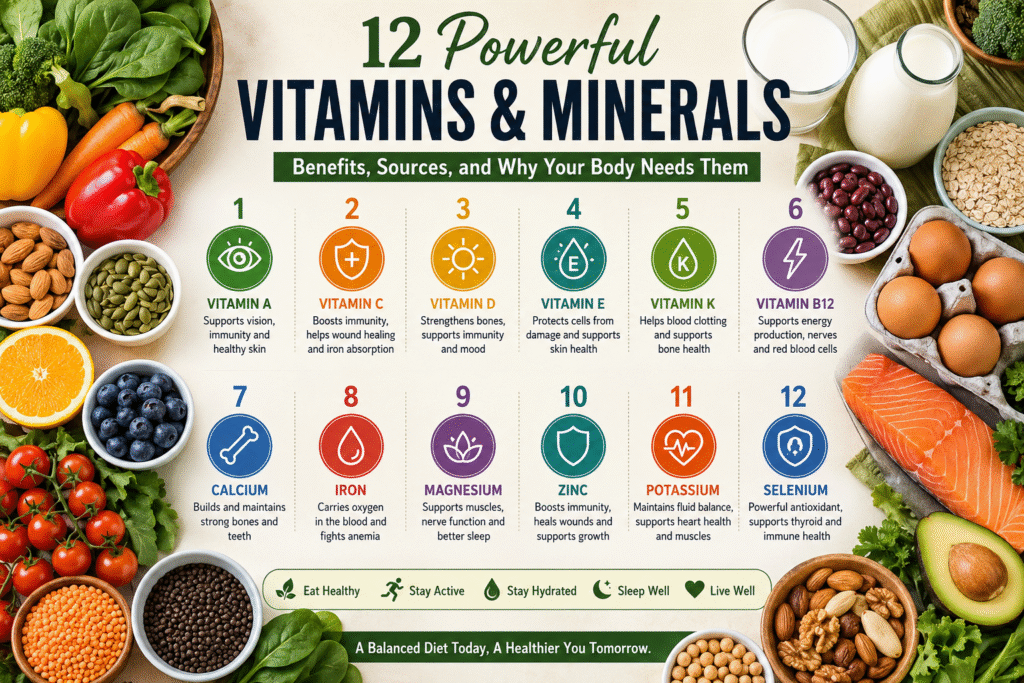
Our bodies need a wide variety of nutrients to function properly every day. Among the most important are vitamins and minerals, which support everything from energy production and immunity to bone strength and brain health.
Unfortunately, many people focus only on calories and protein while ignoring essential micronutrients. Even if you eat enough food, you can still experience nutrient deficiencies that affect your health, mood, and energy levels. In this guide, you’ll learn about 12 powerful vitamins and minerals, their benefits, natural food sources, and why your body cannot function optimally without them.
What Are Vitamins and Minerals?
Vitamins and minerals are micronutrients that your body requires in small amounts to perform critical functions.
Vitamins
Vitamins are organic compounds that help regulate metabolism, immunity, growth, and cell repair.
Minerals
Minerals are inorganic elements that support bone health, nerve function, muscle contractions, hydration, and many other bodily processes.
Unlike carbohydrates, proteins, and fats, micronutrients do not provide energy directly. However, they help your body convert food into usable energy and maintain overall health.
Table of Contents
Why Are Vitamins and Minerals Important?
Vitamins and minerals help:
- Strengthen immunity
- Support healthy bones and teeth
- Improve brain function
- Maintain healthy skin and hair
- Promote proper growth and development
- Support heart health
- Aid energy production
- Prevent nutrient deficiency diseases
A balanced diet rich in nutrient-dense foods is the best way to obtain these essential nutrients.
1. Vitamin A – The Vision and Immunity Booster
Vitamin A is essential for healthy vision, immune function, and skin health.
Benefits
- Supports eye health
- Improves night vision
- Strengthens immunity
- Promotes healthy skin
- Supports cell growth
Best Food Sources
- Carrots
- Sweet potatoes
- Pumpkin
- Spinach
- Kale
- Eggs
- Liver
Deficiency Symptoms
- Night blindness
- Dry eyes
- Frequent infections
Dry skin
2. Vitamin C – The Powerful Antioxidant
Vitamin C is one of the most popular vitamins due to its role in immunity and collagen production.
Benefits
- Boosts immune function
- Helps wound healing
- Promotes healthy skin
- Improves iron absorption
- Protects cells from oxidative stress
Best Food Sources
- Oranges
- Lemons
- Kiwi
- Strawberries
- Guava
- Bell peppers
- Broccoli
Deficiency Symptoms
- Fatigue
- Weak immunity
- Slow wound healing
Bleeding gums
3. Vitamin D – The Sunshine Vitamin
Vitamin D is crucial for calcium absorption and strong bones.
Benefits
- Strengthens bones and teeth
- Supports immune health
- Improves muscle function
- Supports mental well-being
Best Food Sources
- Sunlight exposure
- Fatty fish
- Egg yolks
- Fortified milk
- Mushrooms
Deficiency Symptoms
- Weak bones
- Fatigue
- Muscle weakness
- Frequent illness
4. Vitamin E – The Cell Protector
Vitamin E acts as a powerful antioxidant that protects cells from damage.
Benefits
- Supports healthy skin
- Protects cells from oxidative stress
- Strengthens immunity
- Supports heart health
Best Food Sources
- Almonds
- Sunflower seeds
- Peanuts
- Avocados
- Spinach
Deficiency Symptoms
- Muscle weakness
- Vision problems
- Reduced immunity
5. Vitamin K – The Bone and Blood Helper
Vitamin K is essential for blood clotting and bone health.
Benefits
- Supports normal blood clotting
- Strengthens bones
- Promotes cardiovascular health
Best Food Sources
- Kale
- Spinach
- Broccoli
- Cabbage
- Brussels sprouts
Deficiency Symptoms
- Easy bruising
- Excessive bleeding
- Weak bones
6. Vitamin B12 – The Energy Vitamin
Vitamin B12 plays a major role in nerve function and red blood cell production.
Benefits
- Supports brain health
- Helps energy production
- Maintains healthy nerves
- Prevents anemia
Best Food Sources
- Fish
- Eggs
- Dairy products
- Meat
- Fortified cereals
Deficiency Symptoms
- Fatigue
- Memory issues
- Numbness and tingling
- Anemia
7. Calcium – The Bone Builder
Calcium is the most abundant mineral in the body.
Benefits
- Strengthens bones and teeth
- Supports muscle contractions
- Helps nerve communication
- Supports heart function
Best Food Sources
- Milk
- Yogurt
- Cheese
- Tofu
- Leafy greens
Deficiency Symptoms
- Weak bones
- Muscle cramps
Brittle nails
8. Iron – The Oxygen Carrier
Iron is essential for transporting oxygen throughout the body.
Benefits
- Prevents anemia
- Supports energy production
- Enhances physical performance
- Supports cognitive function
Best Food Sources
- Red meat
- Lentils
- Beans
- Spinach
- Pumpkin seeds
Deficiency Symptoms
- Fatigue
- Weakness
- Pale skin
- Shortness of breath
9. Magnesium – The Multi-Tasking Mineral
Magnesium participates in over 300 biochemical reactions in the body.
Benefits
- Supports muscle function
- Helps regulate blood sugar
- Promotes better sleep
- Supports heart health
Best Food Sources
- Nuts
- Seeds
- Whole grains
- Dark chocolate
- Avocados
Deficiency Symptoms
- Muscle cramps
- Fatigue
- Sleep issues
- Irregular heartbeat
10. Zinc – The Immunity Mineral
Zinc is critical for immune health and wound healing.
Benefits
- Boosts immunity
- Supports wound healing
- Supports growth and development
- Improves skin health
Best Food Sources
- Meat
- Shellfish
- Beans
- Nuts
- Dairy products
Deficiency Symptoms
- Frequent infections
- Hair loss
- Slow wound healing
- Reduced appetite
11. Potassium – The Heart-Friendly Mineral
Potassium helps maintain fluid balance and healthy blood pressure.
Benefits
- Supports heart health
- Regulates blood pressure
- Helps muscle contractions
- Supports nerve function
Best Food Sources
- Bananas
- Potatoes
- Oranges
- Avocados
- Coconut water
Deficiency Symptoms
- Weakness
- Muscle cramps
- Irregular heartbeat
12. Selenium – The Antioxidant Mineral
Selenium helps protect cells from oxidative damage and supports thyroid function.
Benefits
- Supports thyroid health
- Strengthens immunity
- Acts as an antioxidant
- Supports heart health
Best Food Sources
- Brazil nuts
- Fish
- Eggs
- Whole grains
- Poultry
Deficiency Symptoms
- Fatigue
- Weak immunity
- Thyroid problems
How to Get Enough Vitamins and Minerals Naturally
Instead of relying heavily on supplements, focus on a balanced diet that includes:
Fruits
- Oranges
- Apples
- Berries
- Bananas
- Guava
Vegetables
- Spinach
- Kale
- Broccoli
- Carrots
- Bell peppers
Protein Sources
- Eggs
- Fish
- Chicken
- Lentils
- Beans
Healthy Fats
- Nuts
- Seeds
- Avocados
- Olive oil
Dairy Products
- Milk
- Yogurt
- Cheese
Eating a variety of colorful foods ensures a broader intake of essential nutrients.
Can You Take Too Many Vitamins and Minerals?
Yes. More is not always better.
Excessive supplementation can sometimes lead to health problems.
Examples include:
- Too much Vitamin A may cause liver damage.
- Excess iron can be toxic.
- High doses of Vitamin D can increase calcium levels excessively.
Always consult a healthcare professional before taking high-dose supplements.
Tips for Better Nutrient Absorption
To maximize nutrient absorption:
- Pair iron-rich foods with Vitamin C.
- Spend time in sunlight for Vitamin D.
- Eat healthy fats with fat-soluble vitamins (A, D, E, and K).
- Include a variety of foods in your diet.
Avoid excessive processed foods.
Conclusion
Vitamins and minerals are the foundation of good health. They support immunity, energy production, brain function, bone strength, heart health, and countless other bodily processes. While supplements may help in specific cases, the best way to obtain these nutrients is through a balanced and diverse diet rich in fruits, vegetables, whole grains, healthy fats, and quality protein sources.
By understanding the role of these 12 powerful vitamins and minerals, you can make smarter dietary choices and build a healthier lifestyle for years to come.
Frequently Asked Questions (FAQs)
1. What are vitamins and minerals?
Vitamins and minerals are essential micronutrients that help the body perform important functions such as energy production, immunity, growth, and cell repair.
2. Which vitamin is best for immunity?
Vitamin C, Vitamin D, Vitamin A, and Zinc are among the most important nutrients for a healthy immune system.
3. Can I get all vitamins and minerals from food?
Most people can obtain sufficient nutrients from a balanced diet that includes fruits, vegetables, whole grains, proteins, and healthy fats.
4. Which vitamin helps increase energy levels?
Vitamin B12, Iron, and Magnesium play important roles in energy production and reducing fatigue.
5. What happens if I have a vitamin deficiency?
Vitamin deficiencies can lead to fatigue, weak immunity, poor bone health, skin problems, and other health issues depending on the nutrient involved.
6. Are supplements necessary?
Supplements may be beneficial for people with deficiencies, dietary restrictions, or certain medical conditions, but they should not replace a healthy diet.
Related Articles:-
7 Ayurvedic Morning Drinks for Better Digestion and Energy
15 High-Protein Indian Breakfast Ideas for Energy, Muscle Gain & Weight Loss
15 Powerful Wellness Habits for Gen Z Adults that how to Boost Mental and Physical Health
Summer digestion problems? Causes, Symptoms & Natural Remedies That Work
10 Refreshing Homemade Summer Drinks That Naturally Boost Hydration and Energy