
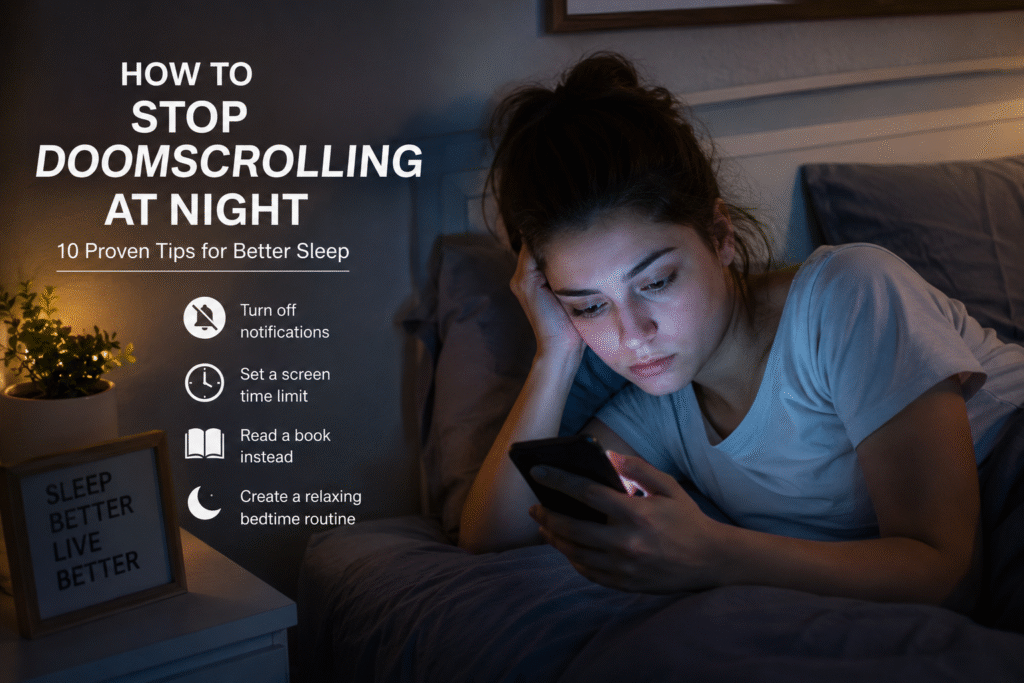
Have you ever picked up your phone “just for five minutes” before bed, only to realize an hour has passed while scrolling through stressful news, social media drama, or negative videos? If yes, you’re not alone.
This habit is called doomscrolling, and it has become one of the biggest nighttime problems in the digital age. Many people scroll endlessly through upsetting content late at night, even when they know it’s harming their sleep and mental health.
The worst part? Doomscrolling doesn’t just waste time—it increases anxiety, overstimulates the brain, and makes it much harder to fall asleep peacefully.
The good news is that you can break this habit. In this article, you’ll learn why doomscrolling happens, how it affects your mind and body, and the best proven tips to stop doomscrolling at night for better sleep and mental wellness.
Table of Contents
What Is Doomscrolling?
Doomscrolling refers to continuously consuming negative or stressful content online for long periods, especially on social media or news apps.
People often doomscroll:
- Before sleeping
- During stressful times
- When feeling anxious or lonely
- Out of habit or boredom
Social media platforms are designed to keep users engaged. Their algorithms constantly show emotional and attention-grabbing content, making it difficult to stop scrolling.
Why Doomscrolling at Night Is Harmful.
Nighttime doomscrolling can seriously affect your physical and mental health.
1. Disrupts Sleep Quality
The blue light from phone screens suppresses melatonin, the hormone responsible for sleep. This delays your body’s natural sleep cycle. According to the Sleep Foundation, excessive screen time before bed can reduce sleep quality and increase insomnia symptoms.
2. Increases Anxiety and Stress
Negative content activates the brain’s stress response. Reading bad news late at night keeps your mind alert when it should be relaxing.
3. Creates Mental Exhaustion
Constant exposure to emotional content overloads the brain and reduces mental clarity.
4. Leads to Poor Morning Energy
Late-night scrolling often causes insufficient sleep, leading to fatigue, poor concentration, and low productivity the next day.
Why People Doomscroll at Night
Understanding the cause is the first step toward stopping it.
Common reasons include:
- Fear of missing out (FOMO)
- Stress and anxiety
- Loneliness
- Habitual phone checking
- Boredom
- Seeking distraction from personal problems
Many people believe scrolling helps them “relax,” but it often does the opposite.
10 Proven Tips to Stop Doomscrolling at Night
1. Set a Screen Time Limit Before Bed
One of the easiest ways to stop doomscrolling is to create a strict cutoff time for your phone usage.
Try stopping all screen activity:
- 30–60 minutes before sleep
- At the same time every night
Most smartphones now include screen time tools that help monitor app usage.
You can also use apps like:
- Digital Wellbeing
- Forest
- Freedom
These apps help reduce distractions and improve focus.
2. Keep Your Phone Away From the Bed
If your phone is beside your pillow, you are more likely to pick it up repeatedly.
Instead:
- Place your phone across the room
- Use a traditional alarm clock
- Avoid charging the phone near your bed
This simple habit creates physical distance from temptation.
3. Replace Scrolling With a Relaxing Night Routine
Breaking doomscrolling becomes easier when you replace it with healthier habits.
Good nighttime activities include:
- Reading a book
- Journaling
- Meditation
- Gentle stretching
- Listening to calming music
A relaxing bedtime routine signals your brain that it’s time to sleep.
4. Turn Off Notifications at Night
Notifications constantly pull your attention back to your phone.
Enable:
- Do Not Disturb mode
- Sleep mode
- Notification scheduling
Reducing interruptions can dramatically decrease nighttime scrolling habits.
5. Avoid Negative News Before Bed
Consuming stressful news late at night increases emotional alertness.
Try this instead:
- Read news earlier in the day
- Limit news intake to trusted sources
- Avoid sensational social media content before sleeping
The American Psychological Association has discussed how constant exposure to stressful media can increase anxiety and emotional fatigue.
6. Use Blue Light Filters or Night Mode
Blue light affects melatonin production and confuses your brain into thinking it’s daytime.
To reduce the impact:
- Turn on Night Mode
- Use blue-light-blocking glasses
- Lower screen brightness at night
While this won’t completely solve doomscrolling, it can reduce sleep disruption.
7. Understand Your Emotional Triggers
Many people doomscroll because they are stressed, anxious, or emotionally overwhelmed.
Ask yourself:
- What emotions trigger my scrolling?
- Am I avoiding something?
- Am I using my phone as an emotional escape?
Recognizing emotional triggers helps you build healthier coping mechanisms.
8. Create a “No Phone” Bedroom Rule
Your bedroom should become a place for rest, not endless content consumption.
Try these boundaries:
- No social media after a certain hour
- No phone in bed
- No scrolling after lights out
Over time, your brain will associate the bedroom with sleep instead of stimulation.
9. Practice Mindfulness or Deep Breathing
Mindfulness helps calm racing thoughts and reduces the urge to keep scrolling.
Simple techniques include:
- Deep breathing exercises
- Guided meditation
- Gratitude journaling
- Body relaxation exercises
Apps like Calm and Headspace can help beginners start mindfulness practices.
10. Replace Social Media With Positive Content
Not all digital content is harmful. The problem comes from endless exposure to negative or emotionally intense information.
Instead of doomscrolling:
- Watch educational videos
- Listen to podcasts
- Read motivational books
- Follow uplifting creators
Positive digital habits improve both sleep and mental health.
How Long Does It Take to Break Doomscrolling Habits?
Habits take time to change. Some people notice improvement within a few days, while others need several weeks.
Consistency matters more than perfection.
Start small:
- Reduce scrolling by 10–15 minutes daily
- Set realistic boundaries
- Celebrate small improvements
Over time, your brain adapts to healthier nighttime routines.
Benefits of Stopping Doomscrolling at Night
Once you reduce doomscrolling, you may notice:
- Faster sleep onset
- Better sleep quality
- Reduced anxiety
- Improved focus
- Better mood
- More energy during the day
- Improved productivity
Many people report feeling mentally lighter and emotionally calmer after reducing nighttime screen exposure.
Healthy Alternatives to Doomscrolling
Here are some healthier nighttime habits you can try:
| Instead of Doomscrolling | Try This |
| Reading stressful news | Reading fiction or self-help books |
| Watching negative videos | Listening to calming music |
| Endless social media | Meditation or journaling |
| Late-night scrolling | Herbal tea and stretching |
| Emotional browsing | Gratitude writing |
Small lifestyle changes can make a huge difference over time.
Final Thoughts
Doomscrolling at night may seem harmless, but it can quietly damage your sleep, mental health, and overall well-being. The constant flood of negative content keeps your brain overstimulated when it should be resting.
The good news is that you don’t need to quit technology completely. By creating healthier digital habits, setting boundaries, and replacing scrolling with calming nighttime activities, you can regain control over your sleep and mental peace. Start with one or two changes today. Even small improvements can lead to better sleep, lower anxiety, and a healthier relationship with your phone.
FAQs
What causes doomscrolling at night?
Doomscrolling is often caused by stress, anxiety, boredom, loneliness, or habit. Social media algorithms also encourage continuous scrolling.
Is doomscrolling bad for sleep?
Yes. Doomscrolling overstimulates the brain and exposes you to blue light, which can delay sleep and reduce sleep quality.
How can I stop scrolling before bed?
Set screen time limits, keep your phone away from the bed, disable notifications, and create a relaxing nighttime routine.
Can doomscrolling increase anxiety?
Yes. Constant exposure to negative content can increase stress, anxiety, and emotional exhaustion.
What should I do instead of doomscrolling?
Try reading books, meditation, journaling, listening to calming music, or practicing mindfulness before sleep.
Related articles:-
10 Refreshing Homemade Summer Drinks That Naturally Boost Hydration and Energy
10 Best Hydrating Fruits for Summer That Keep You Cool and Energized All Day
Can Dehydration Make You Look Older? The Shocking Hidden Link Between Water and Skin Aging?
The Power of a Digital Detox: Improve Mental Health and Reduce Stress
How to Fix Sleep Fatigue Naturally and Wake Up Energized Every Day
[…] How to Stop Doomscrolling at Night: 10 Proven Tips for Better Sleep […]
[…] How to Stop Doomscrolling at Night: 10 Proven Tips for Better Sleep […]